
Ticker: ABBV
Prezzo: 216.40 USD
Target: 266 USD
Company Overview
AbbVie is a research-based biopharmaceutical company with revenue and cash flow concentrated in four core franchises: Immunology, Neuroscience, Oncology, and Aesthetics. The company develops, manufactures, and commercializes branded medicines and therapies globally, with a portfolio spanning autoimmune disease, neurology and psychiatry, hematologic and solid tumors, and medical aesthetics. While the commercial presentation of the business is organized by therapeutic area and geography, AbbVie reports its operations as a single global business segment, reflecting the centralized nature of its R&D, supply chain, and commercial infrastructure.
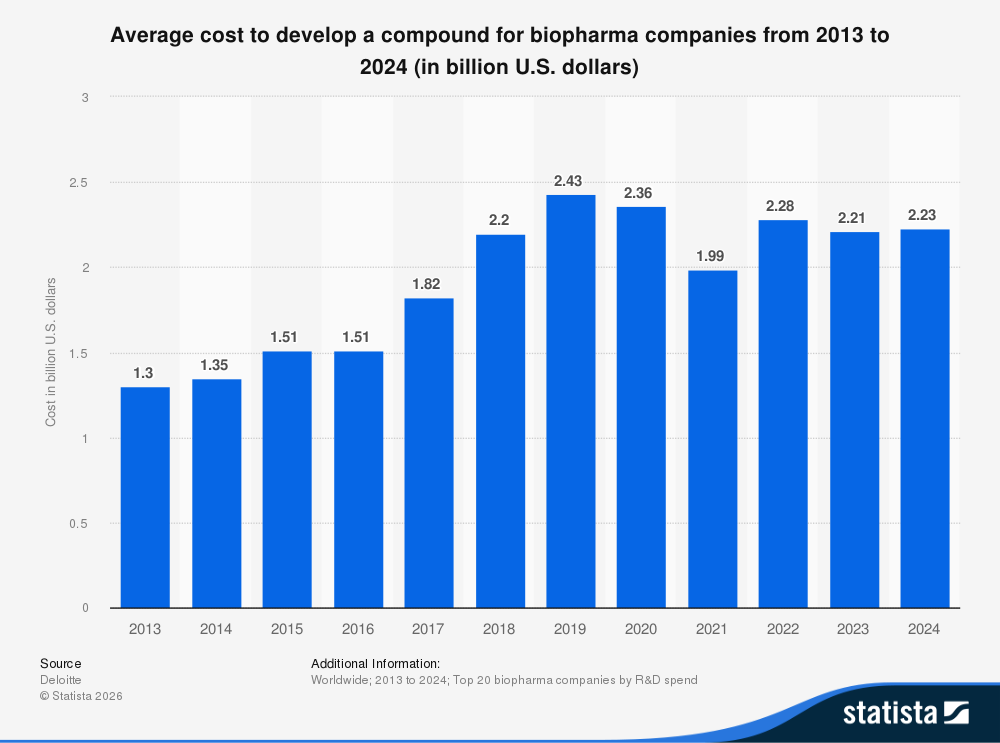
One useful way to frame AbbVie’s operating model is to look at its R&D intensity relative to revenue. While the company continues to invest heavily in research and development in absolute terms, its R&D burden is relatively moderate as a percentage of sales, reflecting the exceptional productivity of its leading franchises.
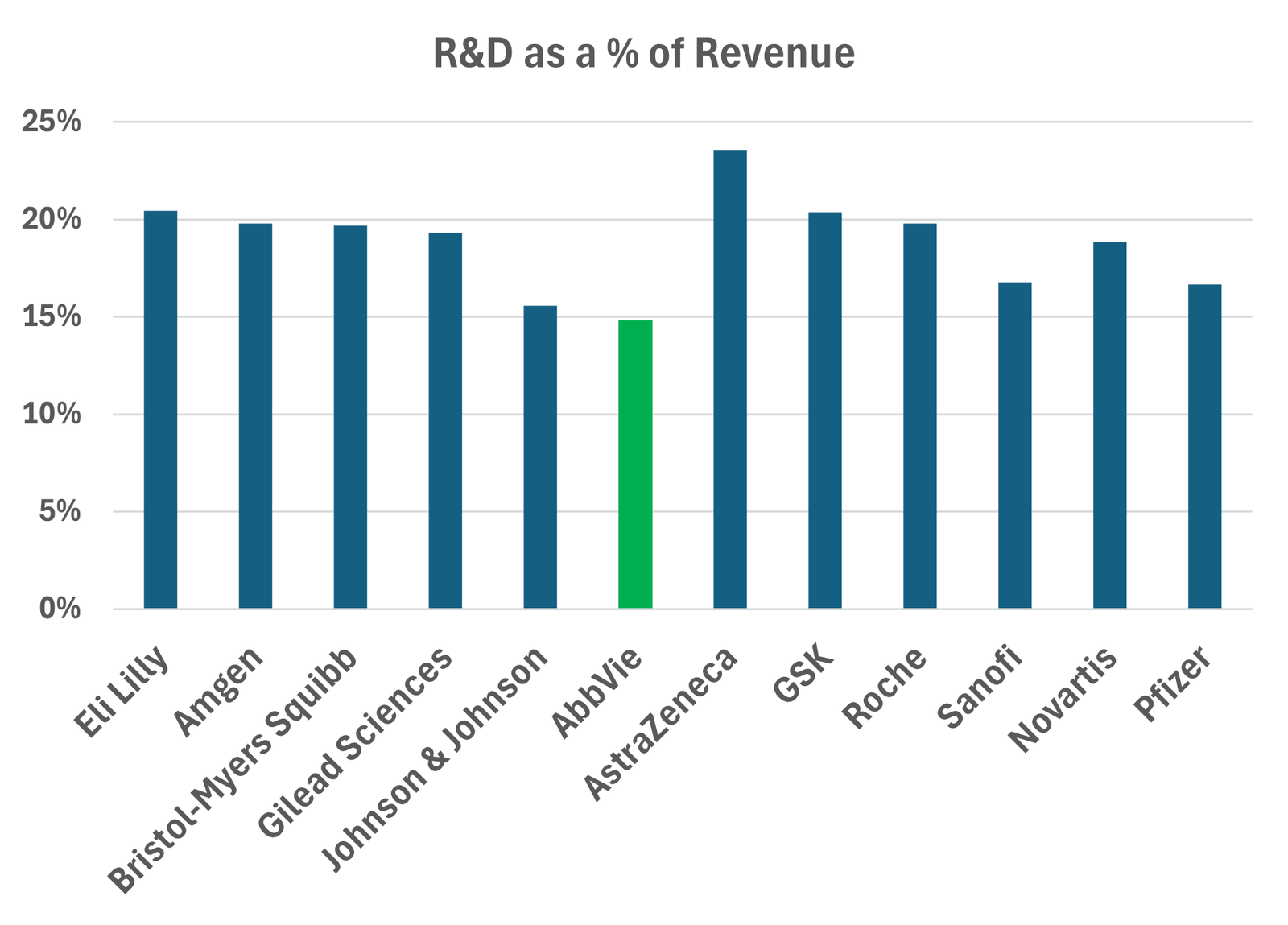
AbbVie’s R&D profile should therefore be interpreted in the context of its franchise economics. Historically, Humira generated exceptional returns on the company’s research base, while today Skyrizi and Rinvoq are playing a similar role by scaling rapidly across multiple indications. As a result, AbbVie does not need to run the highest R&D intensity in the sector to sustain growth, because a meaningful part of its earnings power is already anchored in highly productive blockbuster assets.
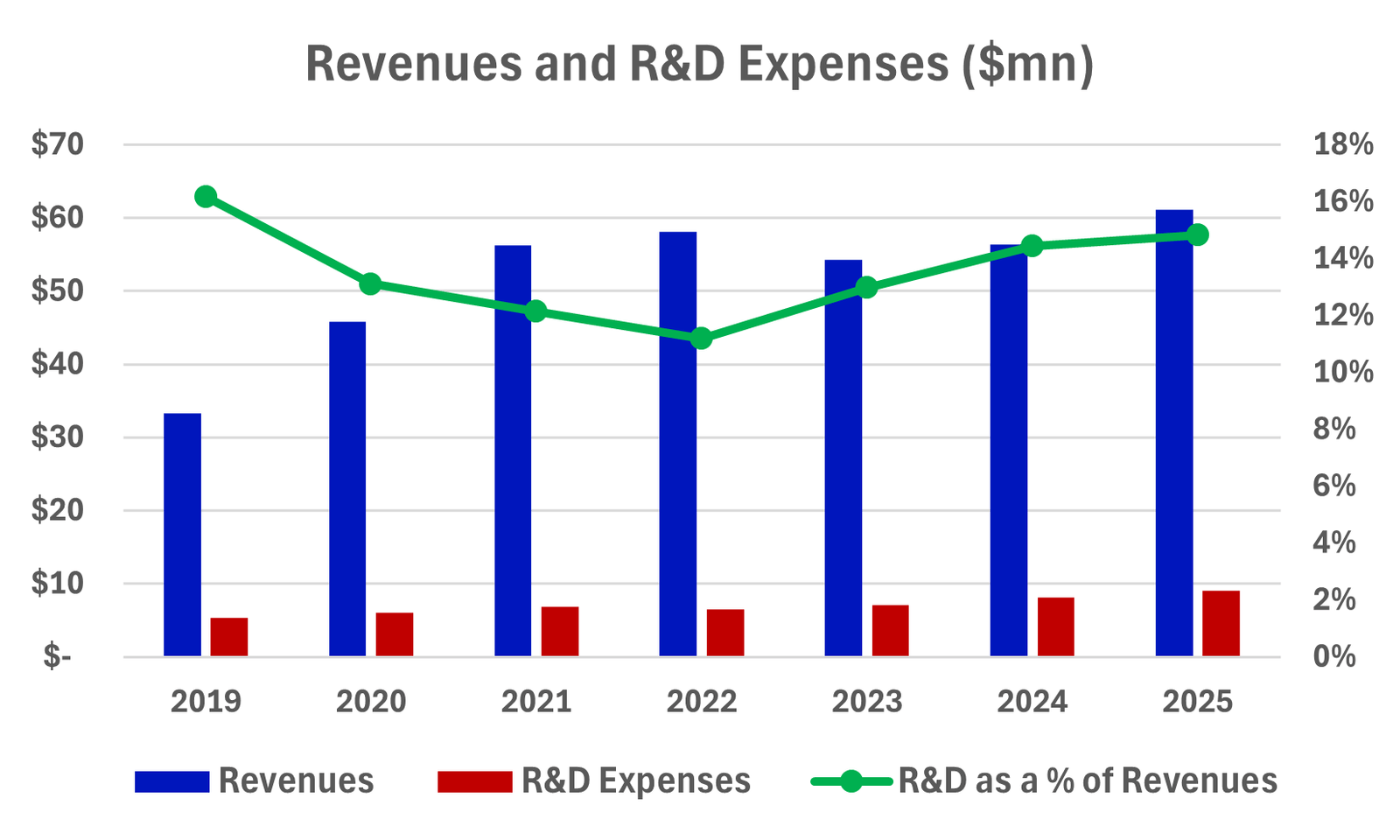
Against this backdrop, high R&D expenses should be seen as investments made to strengthen the IP portfolio. As shown above, higher R&D expenses are generally leading indicators of future revenue growth, as investments transmute into new intellectual properties with long-duration patents.
In 2025, AbbVie generated $61.2bn of net revenue, $15.1bn of operating earnings, and $19.0bn of operating cash flow, confirming that the company has already moved beyond the trough associated with the U.S. Humira loss of exclusivity.
Business Lines
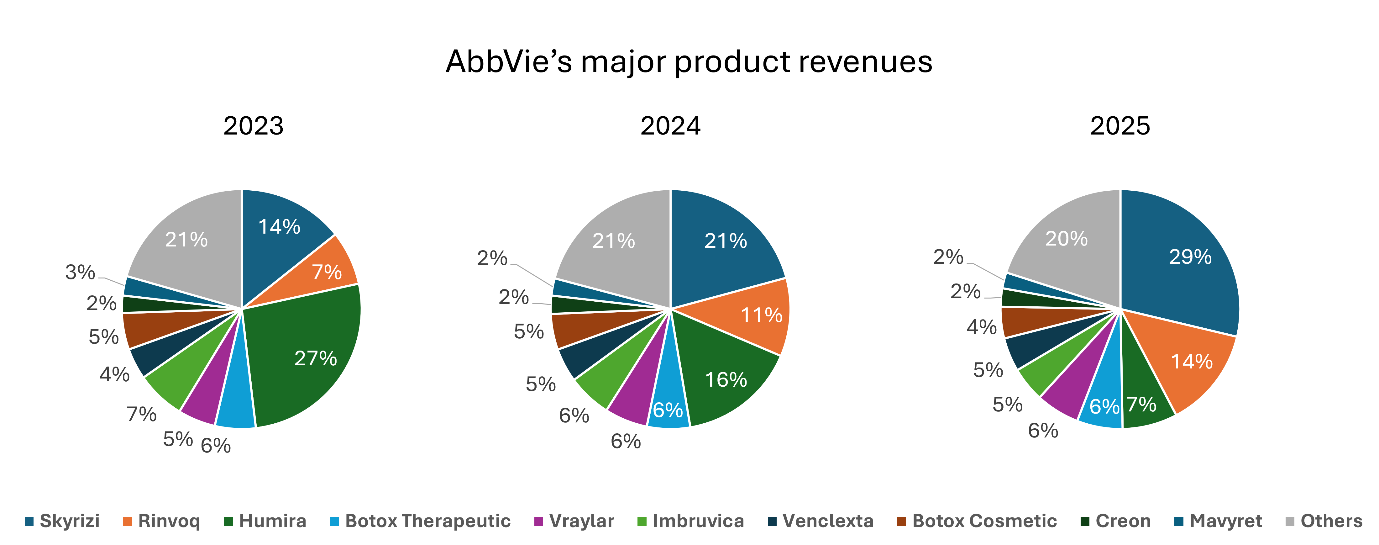
AbbVie’s economic base is concentrated in four therapeutic and commercial pillars.
Immunology is the core economic franchise of AbbVie and remains the company’s primary earnings engine. The business includes Skyrizi, Rinvoq, and the now-mature Humira franchise, with exposure across rheumatology, dermatology, and gastroenterology. What now matters analytically is that the post-Humira transition should no longer be framed as a future objective but as an executed outcome.
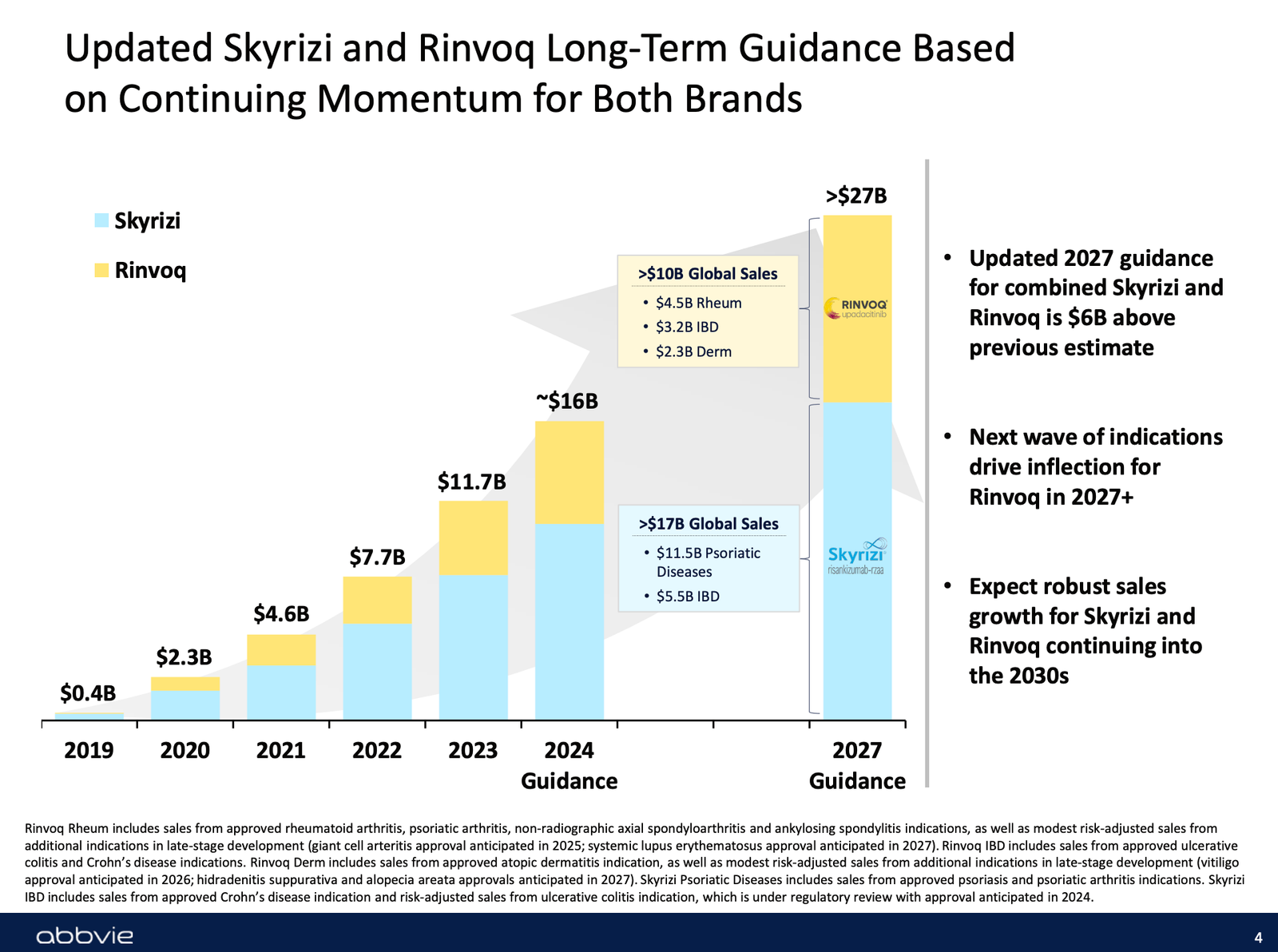
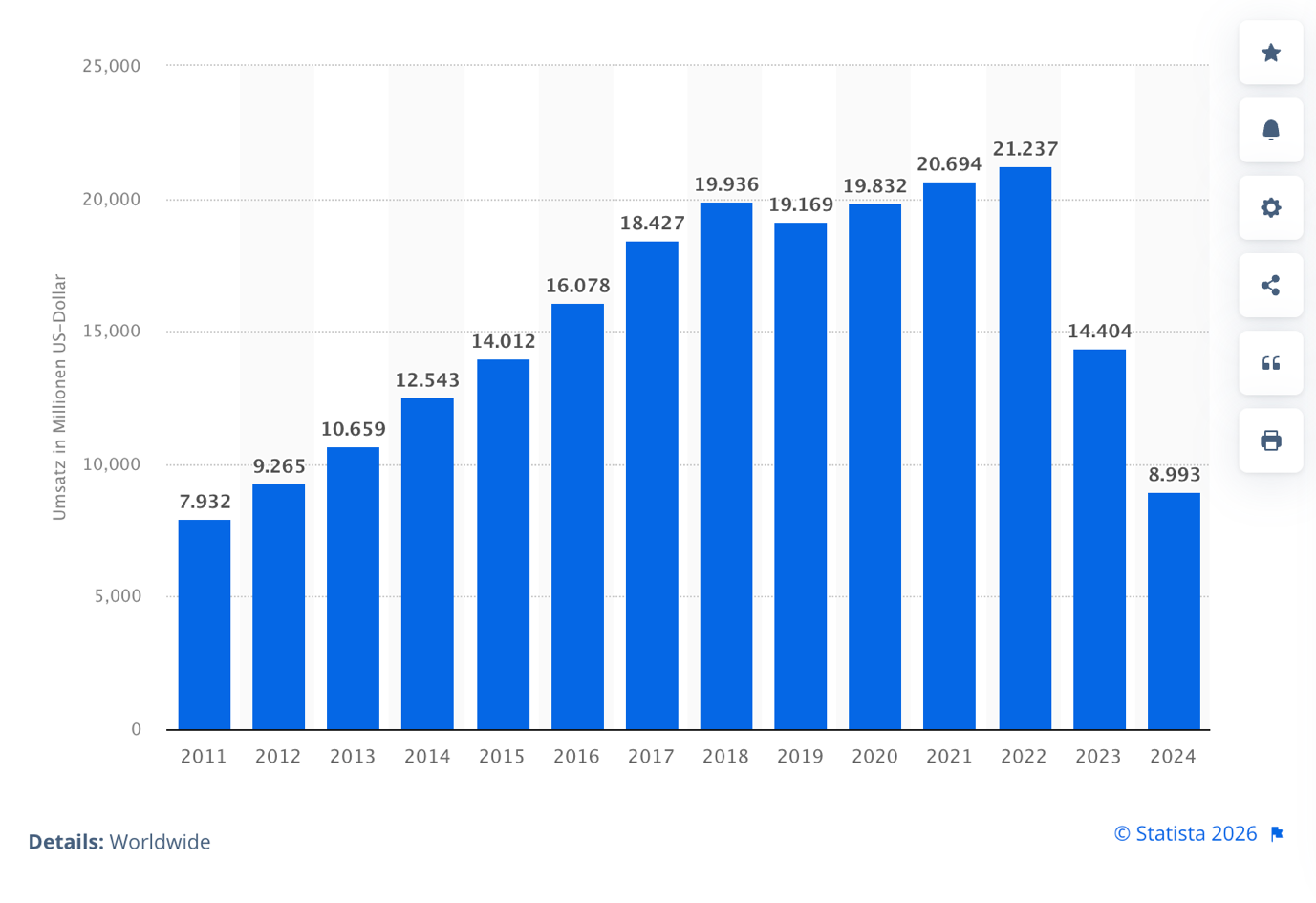
In FY2025, Skyrizi generated $17.562bn and Rinvoq $8.304bn, for combined revenue of $25.866bn, versus Humira at $4.540bn. On a historical basis, this combined Skyrizi/Rinvoq revenue base is already above Humira’s peak annual sales of $21.2bn in 2022, which supports the view that AbbVie has successfully replaced the legacy Humira profit pool with a newer and broader immunology platform.
Neuroscience has evolved from a supporting growth driver into AbbVie’s most important secondary franchise. The portfolio includes Vraylar, Botox Therapeutic, Ubrelvy, Qulipta, Vyalev, and Duodopa, giving the company meaningful exposure to psychiatry, migraine, and movement disorders. The key update for 2026 is that AbbVie’s neuroscience story is no longer centered only on Botox Therapeutic and Vraylar; it now includes an emerging Parkinson’s platform. In FY2025, Vyalev generated $482m of revenue, and management has guided to approximately $1bn of Vyalev sales in 2026, implying blockbuster status this year rather than at launch. That matters because it changes the mix of the franchise: neuroscience is becoming less dependent on legacy neurotoxin economics and more levered to new branded specialty growth in Parkinson’s disease.
Oncology should still be described as a franchise in transition, but the center of that transition is now clearer. The legacy base remains anchored in hematologic oncology, with Imbruvica under pressure and Venclexta providing a more stable counterweight. However, the future strategic value of the franchise increasingly lies in solid tumors and ADC-based innovation. AbbVie’s 2024 acquisition of ImmunoGen is the clearest evidence of this repositioning: the company described ImmunoGen as a commercial-stage oncology platform focused on antibody-drug conjugates (ADCs), with Elahere as its flagship ADC and with a pipeline targeting both hematologic malignancies and solid tumors. AbbVie also stated that the transaction accelerated its entry into the solid tumor space and strengthened its oncology pipeline. In FY2025, Elahere generated $690m of revenue, making it the clearest commercial symbol of AbbVie’s pivot from a legacy blood-cancer franchise toward an ADC-led oncology strategy.
Aesthetics remains structurally distinct from the prescription portfolio. It includes Botox Cosmetic, Juvederm, and the broader Allergan Aesthetics portfolio across facial injectables, regenerative medicine, body contouring, and skincare. From an investment perspective, this business still provides diversification and cash generation, but it remains more exposed to discretionary demand, macro sensitivity, and promotional intensity than the core reimbursed therapeutic franchises. In FY2025, the franchise generated $4.860bn of revenue, with Botox Cosmetic at $2.602bn and Juvederm at $993m.
Industry Analysis
1. Industry Structure and Economic Model
The branded biopharmaceutical industry is structurally different from most other sectors because economic value is created primarily through scientific innovation, clinical validation, regulatory approval, and intellectual property protection, rather than through installed production capacity alone. The operating model is therefore characterized by front-loaded investment and back-loaded monetization: capital is deployed for years in discovery, preclinical work, clinical trials, regulatory submissions, and manufacturing readiness before a product can generate meaningful revenue. In economic terms, this creates a highly asymmetric return profile in which a large number of programs consume capital, while only a small number of approved assets ultimately generate the gross profits needed to fund both successful and failed R&D.
FDA’s own drug-development framework reflects this full life-cycle model, spanning discovery, preclinical research, clinical research, FDA review, and post-market safety monitoring.
This is why R&D in branded biopharma should not be treated as a conventional operating expense. It is the core productive asset of the business model, because the industry must continuously replenish its portfolio before existing products lose legal or commercial protection. The sector can therefore support very high gross margins once a drug is established, but only because those margins are required to amortize years of sunk cost across a broad pipeline with low aggregate success rates.
2. Clinical Development and Pipeline Economics
The pipeline is the central valuation engine of the sector. In clinical research, FDA describes Phase I as the first stage of human testing, focused primarily on safety and typically involving around 20 to 80 participants; Phase II as the stage where efficacy, dose, and side-effect profile begin to be tested more formally; and Phase III as the pivotal stage, often involving 300 to 3,000 participants, designed to demonstrate treatment benefit and characterize safety at scale. Because each successive stage requires more capital, more time, and more organizational coordination, progression through the funnel is one of the main determinants of equity value in the sector.
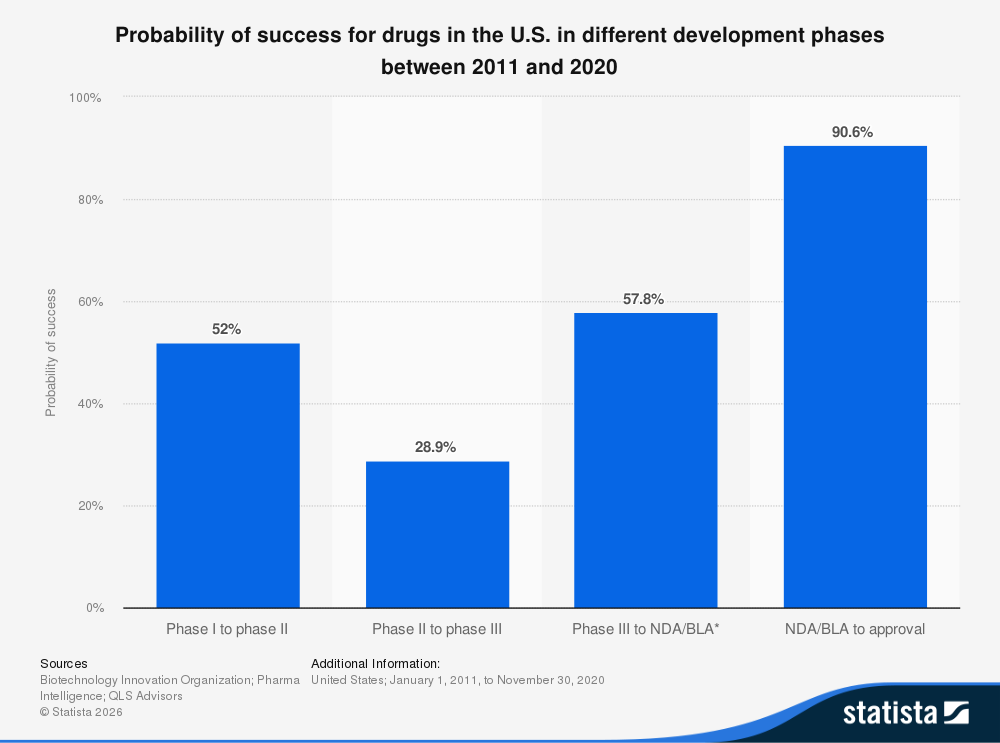
The attrition embedded in this process is severe. The BIO / Informa Pharma Intelligence / QLS Advisors dataset for 2011–2020 highlights the severity of this attrition: the overall likelihood of approval for a drug starting in Phase I is just 7.9%. This is the result of a highly selective funnel: the success rate for Phase I to Phase II is 52.0%, while Phase II represents the principal bottleneck with only a 28.9% transition rate to Phase III. For drugs that reach the final clinical stage, the probability of moving from Phase III to NDA/BLA filing is 57.8%, with the final step from filing to approval reaching 90.6%.
3. Regulatory Framework and Approval Pathways
Regulation is not just a compliance hurdle in this industry; it is a direct driver of value, timing, and capital efficiency. In the United States, the FDA can materially change the commercial trajectory of an asset through expedited pathways such as Fast Track, Breakthrough Therapy, Accelerated Approval, and Priority Review. Under Priority Review, for example, FDA sets a target of six months rather than ten months for standard review. In Europe, the EMA supports development through tools such as scientific advice and then manages centralized review for eligible products. The practical implication is that regulatory strategy, endpoint selection, and agency dialogue can alter both the timing and probability of commercialization.
For that reason, approval should be seen as the output of a structured regulatory design process rather than the simple outcome of a successful trial. A company’s ability to align trial design with agency expectations, select approvable endpoints, and build a submission package that supports both label breadth and speed of review is often as important as the underlying science.
4. Patents, Regulatory Exclusivity, and Patent-Cliff Risk
The economic foundation of branded biopharma is the temporary monopoly created by patent protection and regulatory exclusivity, but these are distinct legal concepts. FDA explicitly states that exclusivity is separate from patents and may run concurrently with, or independently from, the patent estate. For small molecules, the Orange Book is the primary public source for patent and exclusivity information; for biologics, the Purple Book provides information on reference-product exclusivity as well as biosimilarity and interchangeability status.
This distinction matters because the monetization window of an approved drug is determined not only by patent claims, but also by the form and duration of statutory exclusivity. Under the U.S. biologics framework, a reference biologic generally benefits from 12 years of exclusivity, and a biosimilar application generally cannot be submitted until four years after first licensure. Orphan products may also benefit from seven years of market exclusivity if statutory requirements are met. These protections are essential because they create the economic period during which innovators can attempt to recover the cost of both successful and failed R&D.
The counterpart to this protection is the patent cliff. Once legal exclusivity weakens, the rate of erosion depends on the product type and competitive framework. For small molecules, generic entry can drive very rapid price and volume compression. For biologics, erosion has historically been somewhat more gradual, but FDA notes that an interchangeable biologic may be substituted at the pharmacy level, subject to state law, increasing competitive pressure on originator products. The branded biopharma model is therefore inherently temporary: firms must replace old cash flows before exclusivity expires, not after.
Revenue of the pharmaceutical company AbbVie with the drug Humira in the years 2011 to 2024 (in millions of US dollars)
5. Pricing, Reimbursement, and Market Access
Regulatory approval does not by itself guarantee economic success. In modern biopharma, there is effectively a second gate after approval: pricing, reimbursement, and payer access. In the United States, this gate has become more important as Medicare pricing policy has evolved. CMS states that the first negotiated prices under the Medicare Drug Price Negotiation Program became effective on January 1, 2026, and that the third cycle of negotiations announced in January 2026 will produce prices effective in 2028. That means branded drug economics are increasingly shaped not only by scientific differentiation, but also by government price-setting mechanisms and payer leverage.
The European commercial pathway is also becoming more structured after approval. The European Commission states that the HTA Regulation applies from January 12, 2025, and that from that date new cancer medicines and advanced therapy medicinal products fall within the scope of Joint Clinical Assessments. At the national level, reimbursement bodies still remain highly influential. NICE, for example, states explicitly that its recommendations are based on both clinical evidence and cost effectiveness, asking whether a medicine represents value for money for the NHS. In practice, this means approval is necessary but not sufficient: the ability to secure broad reimbursement, favorable formulary placement, and acceptable pharmacoeconomic positioning is central to commercial success.
6. Manufacturing, Supply Chain, and Quality Risk
A major barrier to entry in branded biopharma is the ability to manufacture products reliably, at quality, and at scale. Scientific success alone is not enough; products must be produced consistently under stringent quality standards, often through complex biologics, sterile processes, or device-drug combinations. FDA has highlighted that 62% of drugs newly entering shortage between 2013 and 2017 did so because of manufacturing-quality issues, underscoring that operational execution is itself part of the sector’s economic moat.
This also explains why drug shortages are economically relevant. FDA may work with manufacturers to mitigate shortages through regulatory flexibility, including in some cases temporary importation or discretion regarding medically necessary products, but these actions are exceptional mitigation tools rather than a routine override of exclusivity rights. They show, however, that supply-chain resilience and manufacturing quality are not secondary technical issues; they directly affect revenue durability, market credibility, and the stability of commercial franchises.
7. Post-Marketing Safety and Full Life-Cycle Risk
The risk profile of the industry does not end at launch. FDA’s post-market framework makes clear that approved drugs continue to be monitored through adverse-event reporting and other surveillance mechanisms, and FDA can respond by adding cautions to dosage or usage information or by taking other safety-related measures when warranted. This means even mature blockbuster products remain exposed to commercial risk from label changes, new warnings, narrower usage, or real-world safety findings that diverge from pre-approval expectations.
For investors, this is a crucial feature of the industry: branded biopharma is a full life-cycle risk model, not a one-time approval business. A successful company must therefore manage not only discovery and development, but also regulatory maintenance, pharmacovigilance, manufacturing continuity, and payer relationships over the full commercial life of a product.
8. Strategic Implications for the Sector
Taken together, the branded biopharmaceutical industry combines some of the most attractive and most demanding characteristics in global healthcare. It offers high barriers to entry, strong IP economics, high gross margins, and the potential for long-duration cash flows in chronic and specialty disease categories. At the same time, those cash flows are contingent on a long chain of linked capabilities: translational science, clinical execution, regulatory strategy, exclusivity management, market access, manufacturing quality, and portfolio renewal ahead of future loss-of-exclusivity events.
For that reason, the highest-quality companies in the sector are typically not just those with successful products today, but those with the organizational ability to repeatedly convert scientific innovation into durable commercial franchises across multiple development cycles. That is the central analytical lens through which the industry should be assessed before moving on to any company-specific market-positioning discussion.
Market Positioning
AbbVie’s market position is defined by the combination of scale, franchise concentration, and earnings durability. Within branded biopharma, the company occupies a strong competitive position in large chronic specialty markets, supported by two highly productive immunology assets, a growing neuroscience franchise, and sufficient cash-flow generation to continue funding both internal R&D and external business development.
From an economic standpoint, however, AbbVie’s portfolio is diversified but not evenly distributed. The company’s market position is still heavily anchored in Immunology, which remains the core earnings engine of the group. In 2025, Skyrizi generated $17.562 billion and Rinvoq $8.304 billion, while Humira declined to $4.540 billion after effectively losing exclusivity in 2023. Combined, Skyrizi and Rinvoq generated $25.866 billion of revenue, equal to roughly 42% of total 2025 net sales, which confirms that AbbVie’s post-Humira transition has been operationally successful but also that the company’s economic center of gravity is now concentrated in two large growth assets.

AbbVie’s post-Humira growth profile is increasingly supported by the clinical and commercial strength of Skyrizi and Rinvoq. Both assets appear competitively well positioned versus their relevant peers, which should allow continued market-share gains and patient expansion, thereby offsetting the ongoing biosimilar-driven erosion of Humira.
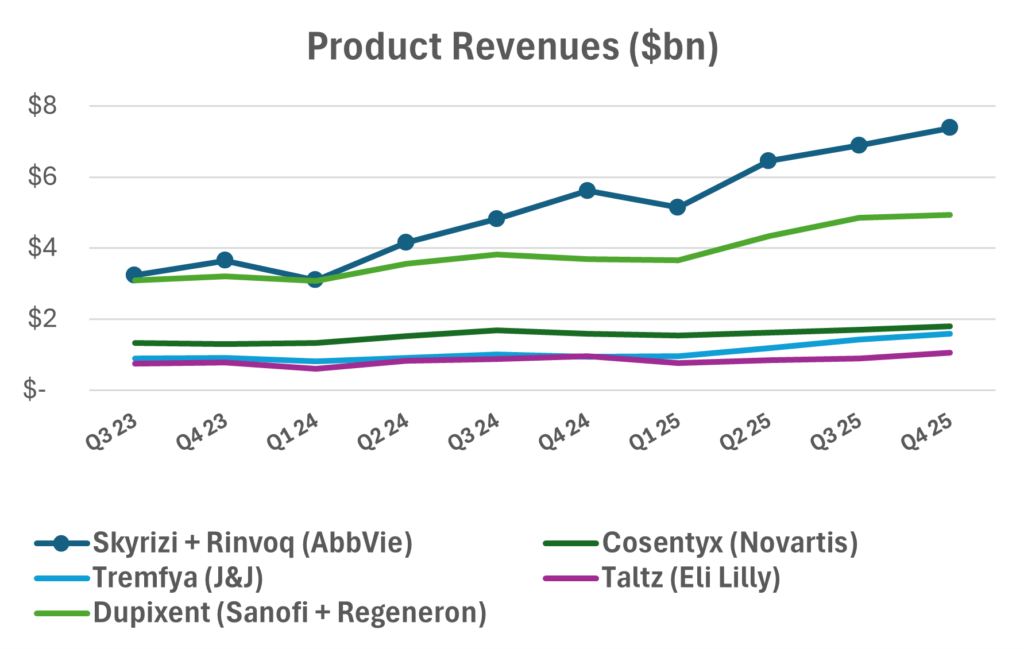
As a result, the Immunology franchise is no longer dependent on defending a legacy asset, but on scaling two newer therapies with stronger growth trajectories and broader commercial runway.
That runway is further supported by label expansion. Rinvoq is already approved across a broad set of immune-mediated diseases and still has additional indications in late-stage development or under regulatory review. Skyrizi, while already established across multiple diseases, is also being advanced through additional clinical programs, including combination-based approaches in new settings. This matters because AbbVie’s medium-term growth is not driven only by deeper penetration in current indications, but also by the ability to extend existing assets into new therapeutic areas. In that sense, the Immunology franchise offers both near-term volume growth and longer-duration lifecycle optionality, which strengthens earnings visibility beyond the decline phase of Humira.
That concentration is not necessarily a weakness; indeed, it reflects the commercial success of the replacement cycle, but it does mean that AbbVie’s positioning in the sector depends heavily on the continued competitiveness, reimbursement resilience, and lifecycle management of those two products.
This concentration is partly offset by a credible second growth pillar in Neuroscience. AbbVie’s neuroscience franchise includes Vraylar, Botox Therapeutic, Ubrelvy, Qulipta, and Vyalev, giving the company exposure to psychiatry, migraine, and movement disorders. In 2025, Vraylar generated $3.621 billion, Botox Therapeutic $3.769 billion, Ubrelvy $1.271 billion, Qulipta $1.036 billion, and Vyalev $482 million, indicating that neuroscience is no longer a peripheral support business but a scaled secondary franchise in its own right. This improves AbbVie’s market positioning relative to peers that remain more dependent on a single therapeutic vertical. By contrast, Oncology remains strategically important but still transitional, with Imbruvica under pressure and Venclexta and Elahere representing the more durable parts of the current portfolio. Aesthetics adds diversification and brand equity, but remains more exposed to discretionary demand and therefore contributes less to the defensive quality of the investment case than the prescription portfolio.
The strongest argument in favor of AbbVie’s current positioning is that its largest growth drivers still retain a meaningful exclusivity runway.

The 2025 Form 10-K explicitly states that the most significant patents, licenses, and trademarks in the business are those related to risankizumab (Skyrizi) and upadacitinib (Rinvoq), and that the U.S. composition-of-matter patents covering both products are expected to expire in 2033. More importantly, following AbbVie’s September 2025 settlement with all generic manufacturers that had filed ANDAs for upadacitinib tablets, the company states that, assuming pediatric exclusivity is granted, no generic entry for Rinvoq tablets is expected in the United States prior to April 2037.
AbbVie also states that it does not believe any other single patent, license, trademark, or related group of such rights is material to the business as a whole. In analytical terms, this is highly relevant: it suggests that the company’s most important current profit pool is concentrated, but also that its concentration is anchored in assets with relatively long remaining legal protection, materially delaying the next major cliff at the core of the business.
That said, AbbVie’s competitive positioning is not insulated from revenue erosion prior to loss of exclusivity. As discussed in the industry analysis, branded biopharma is increasingly exposed not only to hard patent expiry, but also to earlier revenue pressure from payer systems and government price-setting. AbbVie’s own 10-K states that Imbruvica is subject to government-set prices in Medicare Part D beginning in 2026, Vraylar and Linzess beginning in 2027, and Botox beginning in 2028. The company explicitly acknowledges that additional products generating substantial revenue could be selected in future years, which could accelerate revenue erosion before the expiration of intellectual property protections. This is an important qualifier to the patent-runway argument: AbbVie is better protected than many peers on the IP side of its core immunology franchise, but parts of the broader portfolio remain exposed to pricing and reimbursement pressure well before formal patent expiry.
Overall, AbbVie’s market positioning can be summarized as that of a high-quality but concentrated branded-biopharma platform. Its strengths lie in the scale and durability of its immunology franchise, the growing relevance of neuroscience as a secondary earnings engine, and the company’s ability to support portfolio renewal through pipeline investment, commercial execution, and business development. Its vulnerabilities lie in concentration around a limited number of large assets, the eventual need to replace the Skyrizi/Rinvoq profit pool over time, and the increasing role of payer-driven erosion across mature brands. For investors, the key conclusion is that AbbVie is currently positioned from a place of relative competitive strength: it has already crossed the post-Humira bridge, it retains long-runway protection around its core assets, and it still generates the cash flow needed to fund both internal innovation and external portfolio reinforcement.
Recent Share Performance
AbbVie delivered a strong equity performance in 2025, with the stock rising by roughly 25% – 26%, materially outperforming the S&P 500 (16% gain), as investors increasingly de-risked the post-Humira transition and rewarded the improving quality of the company’s growth profile.

The rerating was fundamentally supported by a return to top-line growth, repeated earnings delivery above expectations, and growing confidence that Skyrizi and Rinvoq had firmly replaced Humira as the core economic engine of the business.
In FY2025, AbbVie generated $61.2bn of net revenue, up roughly 9% year on year, while GAAP operating earnings reached $15.1bn (+65% YoY) and cash flow from operations reached $19.0bn.
The quality of that growth also improved materially. Product mix shifted further toward newer, higher-growth franchises, with Skyrizi rising to $17.6bn and Rinvoq to $8.3bn, more than offsetting the continued erosion of Humira to $4.5bn. Outside immunology, AbbVie also posted solid contributions from Vraylar, Botox Therapeutic, Ubrelvy, Qulipta, Elahere, and Vyalev, confirming that neuroscience is becoming a more meaningful secondary growth pillar even as aesthetics remains softer.
This mix shift matters for the stock because the market is no longer valuing AbbVie as a company merely managing legacy decline, but increasingly as a company with a more durable and diversified earnings base.
Recent quarterly execution reinforced that view. Across the last five reported quarters, AbbVie consistently beat consensus on revenue and adjusted EPS, including 4Q25, when revenue of $16.62bn and adjusted EPS of $2.71 both came in above expectations.
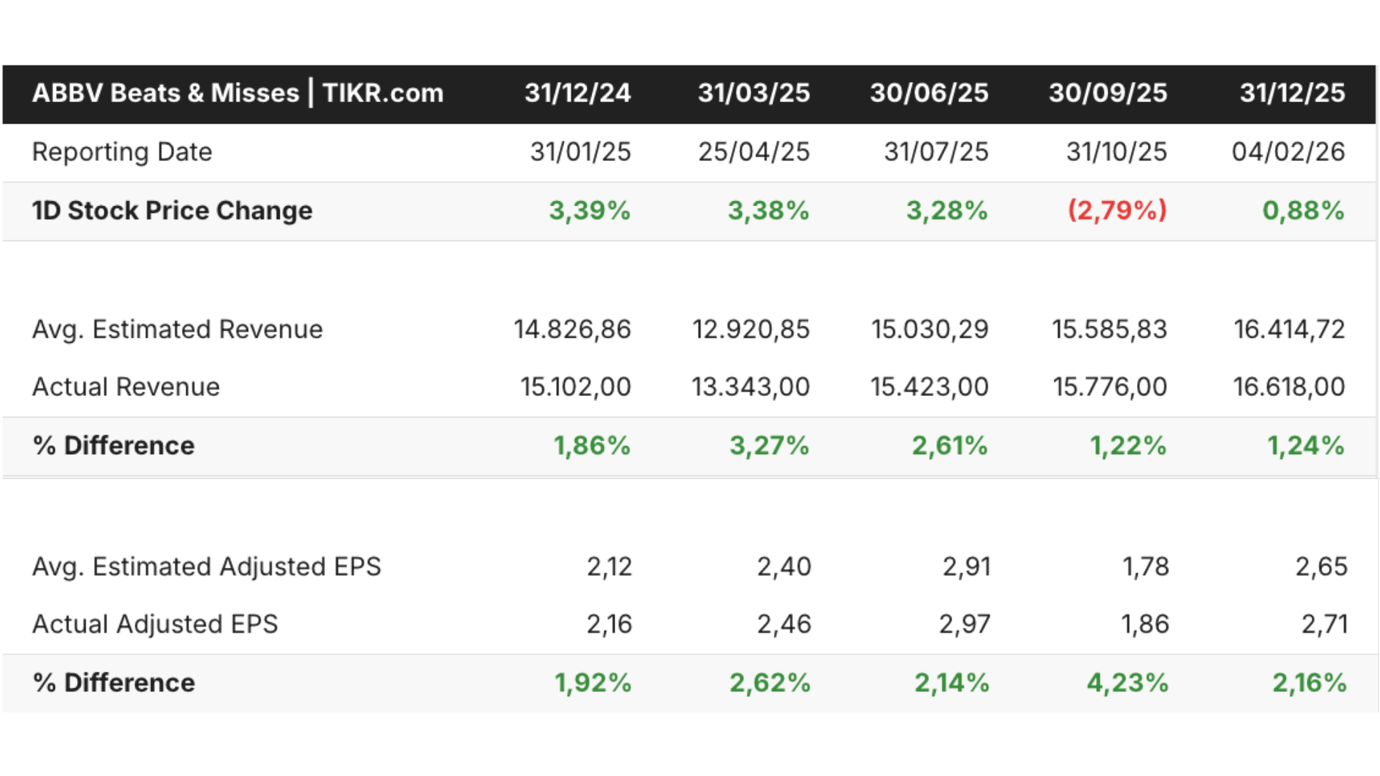
This pattern of steady operational delivery likely contributed to the stock’s rerating during 2025, particularly as it improved investor confidence in management’s ability to navigate Humira erosion without sacrificing group-level earnings power.
Profitability also improved in 2025. Based on the data, gross margin remained solid at roughly 70%, while operating income recovered from about $11.9bn in 2024 to $20.1bn in 2025 and EBITDA increased from approximately $14.9bn to $17.6bn. This indicates that the return to revenue growth was accompanied by a meaningful recovery in operating profitability, rather than being offset by weaker mix or commercial dilution.
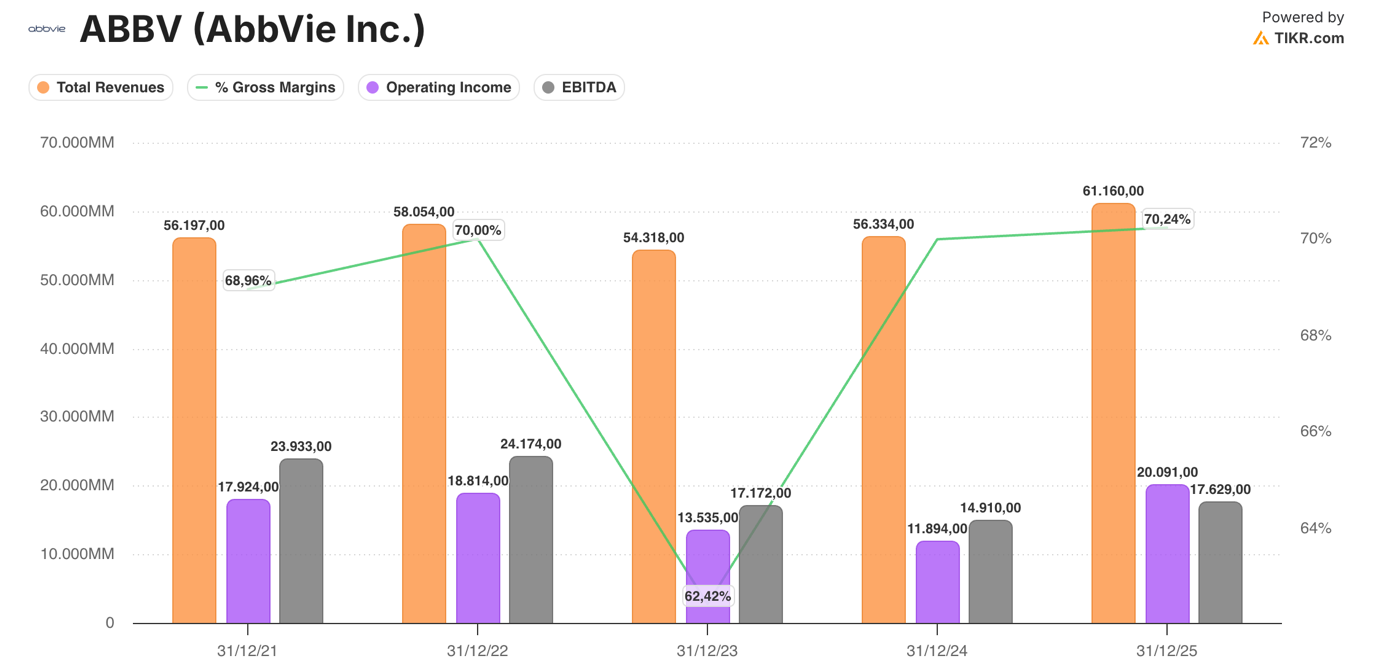
AbbVie’s EBITDA profile should be read in three phases: 2021–2022 reflected the final phase of pre-Humira peak earnings; 2023–2024 captured the reset following U.S. Humira biosimilar erosion, compounded by acquisition-related noise; and 2025 marked the beginning of a recovery built on a new earnings base led by Skyrizi, Rinvoq, and a growing neuroscience franchise.
At the same time, AbbVie maintained strong operating cash generation despite continued reinvestment, with cash from operations of $19.0bn in 2025 and R&D expense increasing to roughly $9.1bn.
That said, the stock has started 2026 on a softer footing, down roughly 10.3% YTD, lagging the S&P 500 which is down about 3.1% over the same period. This does not necessarily indicate a deterioration in the underlying business. More likely, it reflects a combination of valuation normalization after a strong 2025 rerating and a market that is now demanding continued upside rather than simply “good enough” execution. AbbVie’s current valuation already embeds part of the operational improvement: based on our data, the stock is trading at around 14.1x NTM P/E and 12.7x NTM EV/EBITDA, slightly above both its 5-year and 10-year historical averages, while the implied levered free-cash-flow yield is below long-term averages.
In other words, the 2025 rally appears to have been driven not only by better fundamentals, but also by a meaningful rerating of the multiple.
Balance-sheet dynamics should be framed carefully. While net debt remained elevated, this was largely the consequence of AbbVie’s 2024 acquisition cycle, including ImmunoGen ($9.8bn fair value; $9.2bn net of cash acquired) and Cerevel ($8.7bn; $8.3bn net of cash acquired), which were financed in part through $15.0bn of senior notes, bridge and term-loan facilities, and assumed debt obligations.
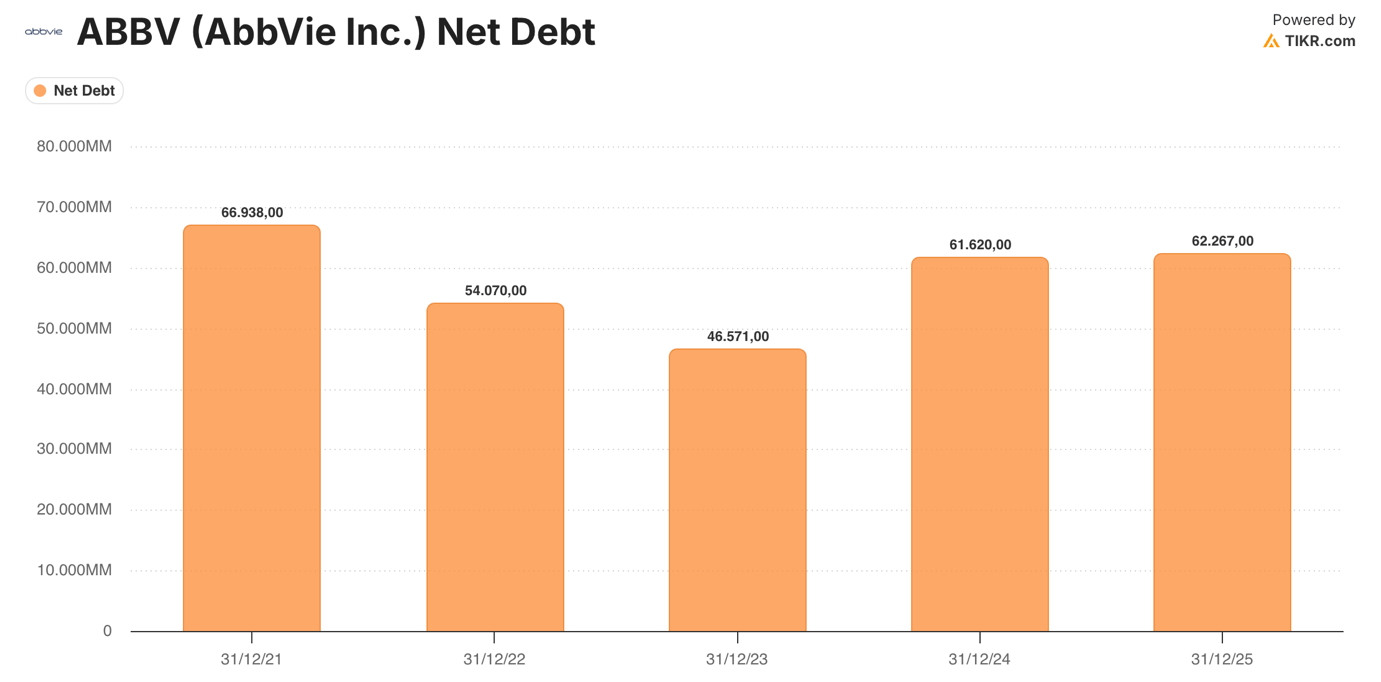
AbbVie also deployed additional capital into business development, including the $1.4bn Aliada acquisition recorded in 4Q24, and continued U.S. manufacturing expansion. Therefore, the investment case in 2025 was not a deleveraging story, but rather a derisking and rerating story: the market rewarded AbbVie because earnings quality improved, growth became more durable, and the company demonstrated that it could reinvest heavily while preserving strong margins and substantial cash generation.
Recent Financial Performance
AbbVie’s recent financial performance confirms that the company has moved beyond the most acute phase of the post-Humira reset and is now rebuilding growth on a stronger and more diversified earnings base. Quarterly revenue trends improved steadily throughout 2025, rising from $13.34bn in 1Q25 to $16.62bn in 4Q25, while year-over-year growth accelerated from roughly 8.4% in 1Q25 to 10.0% in 4Q25.
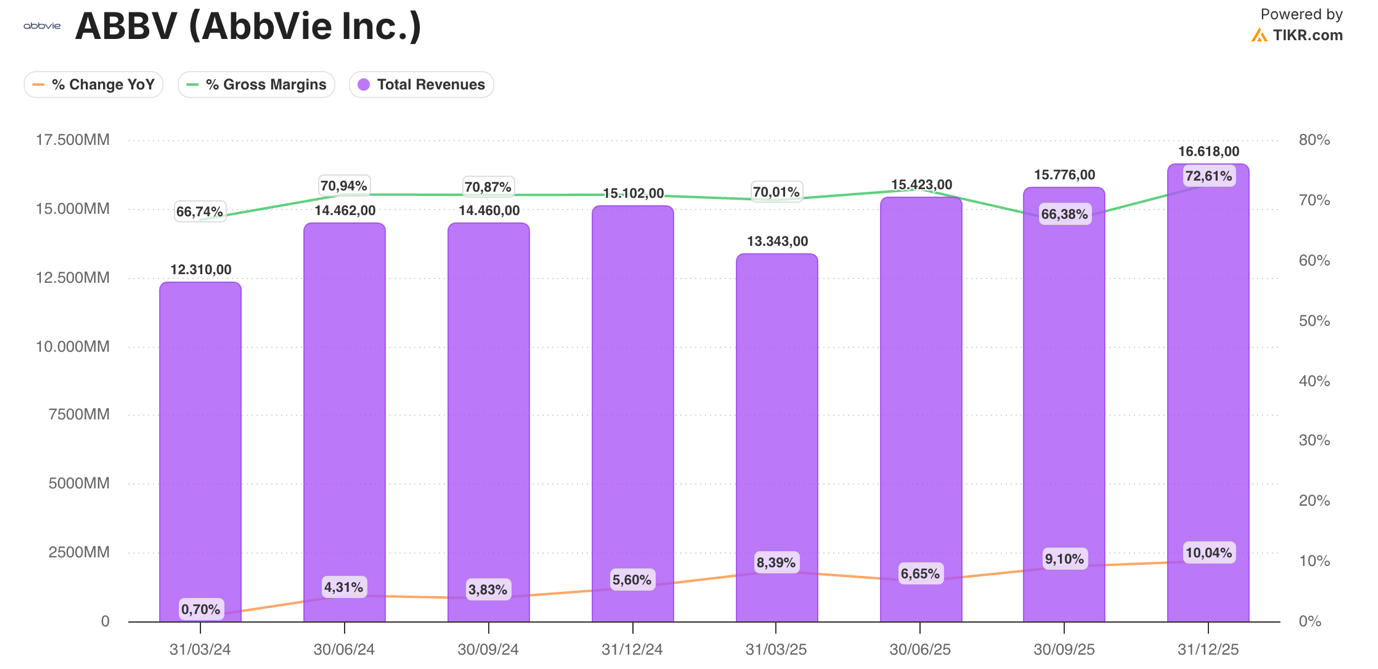
This top-line momentum was driven primarily by the continued scaling of Skyrizi and Rinvoq, whose growth more than offset the ongoing decline of Humira, while additional support came from neuroscience, particularly Vraylar, Botox Therapeutic, Ubrelvy, Qulipta, and the early ramp of Vyalev. On a full-year basis, AbbVie generated $61.16bn of revenue in 2025, up 8.6% year on year, with management attributing growth mainly to continued market share uptake and market expansion across Skyrizi and Rinvoq indications.
Quarterly profitability also improved over the course of 2025, although not in a straight line. Based on company data, EBIT margin increased from 17.7% in 1Q25 to 20.4% in 4Q25, while EBITDA margin remained broadly stable, moving from 33.0% to 32.3% after weakening through the middle of the year. Taken together, this suggests that revenue growth in 2025 was accompanied by a recovery in operating profitability, even if margin progression was not uniform across the year.
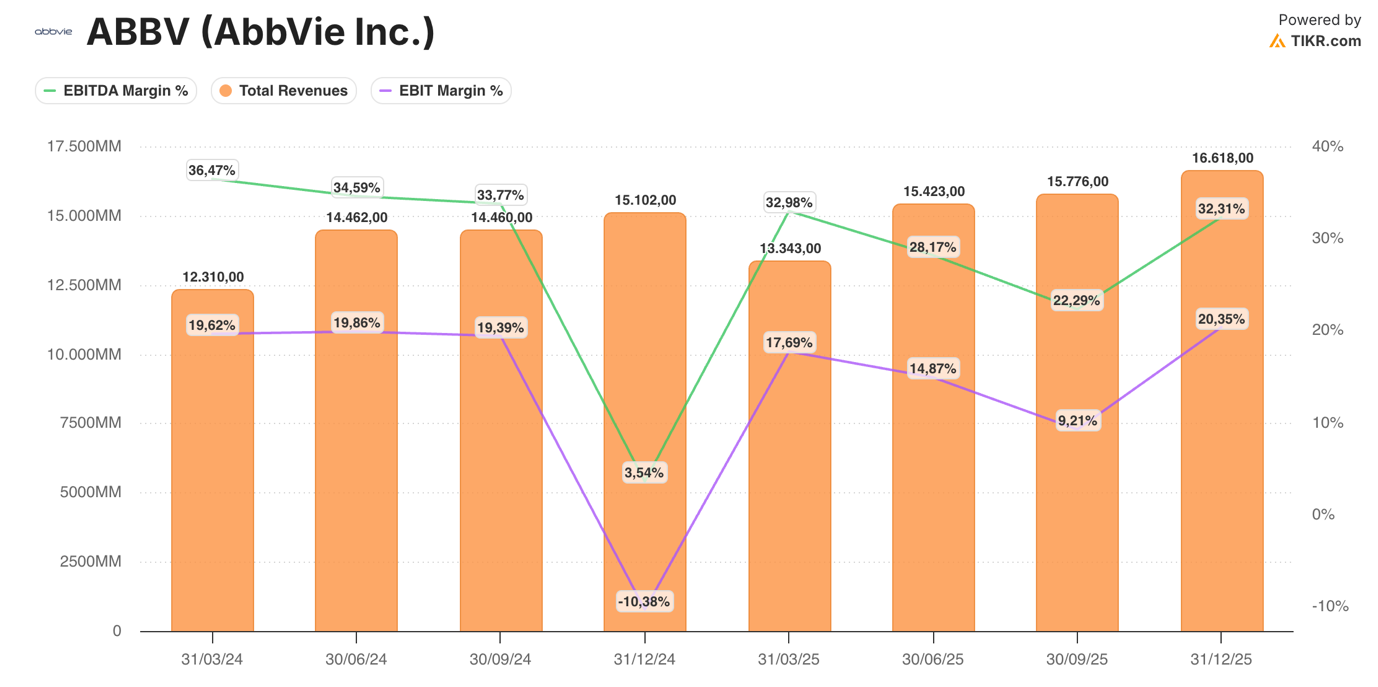
One important nuance is that the profitability recovery in 2025 should not be read as a return to AbbVie’s old Humira-era earnings structure. Instead, it reflects the emergence of a new mix, in which immunology remains the core engine but neuroscience is becoming more meaningful and oncology is gradually improving through assets such as Venclexta and Elahere. This is visible in the annual product mix: in 2025, Skyrizi rose to $17.56bn, Rinvoq to $8.30bn, Vraylar to $3.62bn, Botox Therapeutic to $3.77bn, Ubrelvy to $1.27bn, Qulipta to $1.04bn, and Vyalev to $482m, while Humira fell to $4.54bn, Imbruvica to $2.87bn, and aesthetics remained softer, with Botox Cosmetic down to $2.60bn and Juvederm to $993m.
Execution against expectations has also remained solid. AbbVie beat consensus on both revenue and adjusted EPS in each of the last five reported quarters, including 4Q25, when revenue came in at $16.62bn versus consensus of roughly $16.41bn, and adjusted EPS was $2.71 versus consensus of $2.65.
This consistency matters because it reinforces the market’s perception that the company’s growth is not only visible, but increasingly dependable.
At the full-year level, the improvement in operating quality is also evident in the reported P&L. AbbVie generated $15.1bn of operating earnings and $19.0bn of operating cash flow in 2025.
Gross margin was $42.96bn, equal to roughly 70% of revenue, while SG&A fell to 23% of revenue from 26% in 2024, reflecting operating leverage and lower acquisition and integration costs. R&D expense declined to 15% of revenue from 23% in 2024, although that year was inflated by acquisition-related and impairment charges.
Looking forward, management’s 2026 guidance suggests that this recovery is expected to continue. AbbVie guided to approximately $67bn of revenue in 2026 and adjusted diluted EPS of $14.37 to $14.57, implying another year of high-single-digit top-line growth with stronger earnings conversion. In other words, recent financial performance supports the view that AbbVie is no longer simply absorbing a patent cliff; it is now demonstrating the early contours of a new, post-Humira growth and profitability cycle.
Financial Risk
AbbVie’s balance sheet has to be assessed against the company’s very large operating base. In 2025, the group generated $61.2bn of revenue and roughly $17.6bn of EBITDA, while year-end net debt was approximately $63bn, implying net leverage of about 3.6x. The historical pattern matters more than the point-in-time number: leverage had already come down materially after the Allergan integration, but then moved back up as AbbVie financed a new acquisition cycle rather than prioritizing debt reduction.
In particular, the company issued $15.0bn of senior notes in February 2024 to help fund the acquisitions of ImmunoGen and Cerevel Therapeutics, and in 2025 it added further financing through $4.0bn of new senior notes and a $2.0bn term loan, partly offset by debt repayments.
The key mitigating factor is the group’s cash generation. AbbVie produced $19.0bn of operating cash flow in 2025, after $18.8bn in 2024 and $22.8bn in 2023, while capital expenditure remained modest at $1.2bn, $1.0bn, and $0.8bn, respectively. On that basis, free cash flow was roughly $17.8bn in 2025, $17.8bn in 2024, and $22.1bn in 2023.
In the recent past, AbbVie has reported a 3-year average FCF conversion comfortably above 100%, which is unusually strong but consistent with AbbVie’s model: the business is not capital intensive, while reported earnings include significant non-cash amortization and acquisition-related charges.
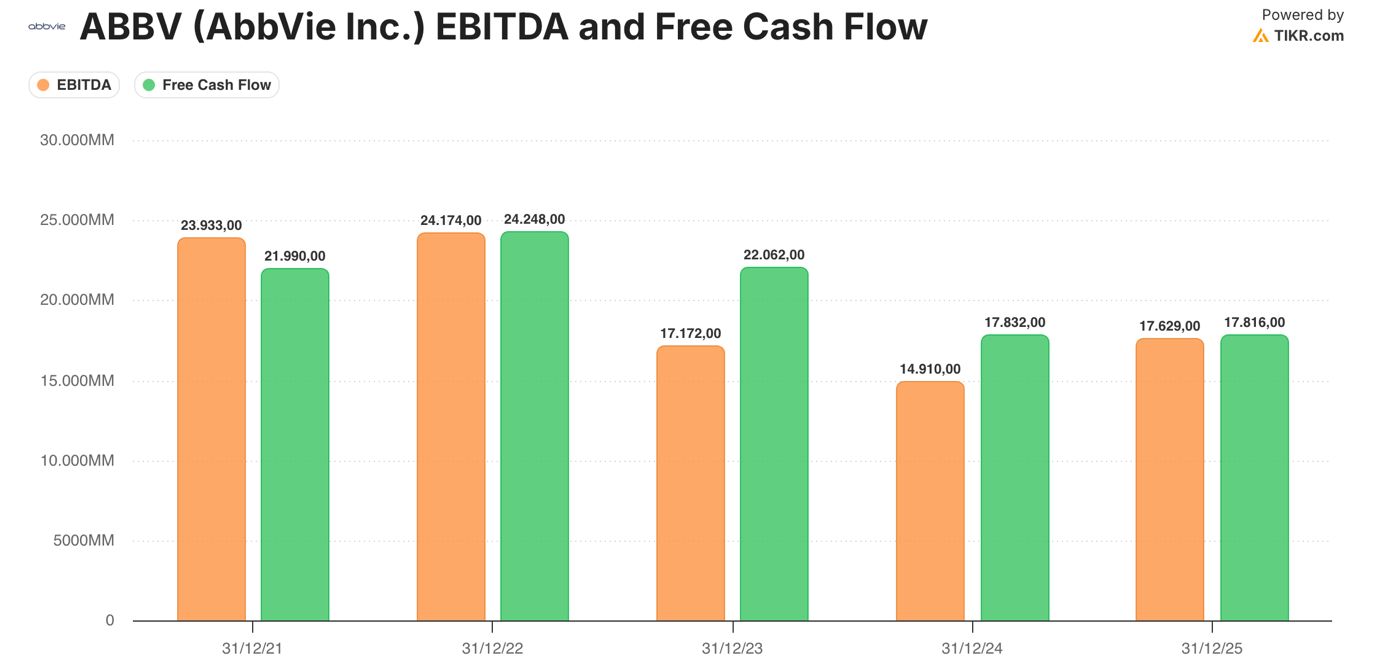
In other words, AbbVie remains a structurally cash-generative business even while carrying a sizeable debt load.
What matters most is how that cash is allocated. Debt repayment remains a meaningful use of cash for AbbVie, but the company is not prioritizing rapid net debt reduction above all else. In 2025, AbbVie paid $11.7bn of dividends, repurchased about $1.0bn of stock, and deployed $5.2bn toward other acquisitions and investments. In 2024, it paid $11.0bn of dividends, repurchased $1.7bn of stock, and absorbed $18.5bn of acquisition cash consideration for ImmunoGen and Cerevel, in addition to $3.0bn of other acquisitions and investments. This is the financial profile of a company that balances debt service with shareholder distributions and external innovation, rather than one pursuing an aggressive deleveraging path.
From a pure credit perspective, the balance sheet remains serviceable. At year-end 2025, AbbVie held $5.2bn of cash, had $2.5bn of short-term borrowings, $6.1bn of current maturities of long-term debt and finance leases, and $58.9bn of long-term debt and finance lease obligations. The maturity ladder is spread over multiple years, with about $6.0bn due in 2026, $5.1bn in 2027, $4.5bn in 2028, and $8.6bn in 2029, while no amounts were drawn on the revolving credit facilities at year-end. AbbVie also benefited from a Moody’s upgrade to A2 with a stable outlook in February 2026, which supports the view that access to capital remains solid.
The main financial risk is therefore not near-term liquidity stress, but capital allocation discipline. AbbVie has the scale, margins, and recurring cash generation to carry its debt burden, but its leverage is likely to decline only gradually so long as management continues to direct a large portion of free cash flow toward dividends, buybacks, and business development. That makes the company’s financial risk profile best understood as that of a highly cash-generative acquirer: balance-sheet risk is manageable, but not immaterial, because debt reduction competes directly with M&A and shareholder returns for the use of cash.
Investment Thesis
AbbVie is no longer an investment case centered on whether the company can survive Humira’s patent cliff; it is now a case centered on whether the market is correctly pricing the durability of the earnings base that has replaced it.
In 2025, Humira generated $4.5bn, while Skyrizi and Rinvoq generated a combined $25.9bn, firmly establishing themselves as the company’s new economic core. Management now expects Skyrizi and Rinvoq to generate more than $31 billion of combined sales in 2026, already exceeding the company’s prior 2027 long-term target, which reinforces the view that the replacement cycle has not only worked, but is progressing ahead of plan.

This matters because AbbVie is still expected to deliver approximately 9.5% total sales growth in 2026, despite the continued erosion of Humira and the impact of IRA pricing on Imbruvica.
In other words, the new portfolio is not merely offsetting legacy decline, it is generating enough incremental growth to keep the group on a high-single-digit trajectory. That interpretation is also consistent with AbbVie’s broader long-term framework, which points to robust growth through the remainder of the decade.

A second important element of the thesis is that the growth profile is becoming broader. AbbVie has already demonstrated that immunology can carry the group, but the business is no longer reliant on immunology alone.
In 2025, Neuroscience generated $10.8bn of revenue, including meaningful contributions from Vraylar ($3.6bn), Botox Therapeutic ($3.8bn), Ubrelvy ($1.3bn), Qulipta ($1.0bn), and Vyalev ($482m).
On the latest call, management was unusually explicit in arguing that this franchise remains underappreciated, particularly in Parkinson’s and migraine, where internal peak-sales expectations appear higher than what the Street is currently discounting. That matters because a broader growth base reduces the risk that AbbVie remains a pure two-asset story over time.

The third pillar of the thesis is duration. AbbVie’s current growth is not only supported by on-market execution, but also by a relatively dense pipeline and regulatory calendar. Management highlighted a number of key catalysts over the next 24 months, including additional Rinvoq indications, initial data from the Crohn’s combination platform with Skyrizi, neuroscience readouts for 932, bretisilocin, and emraclidine, and oncology data for etentamig and Temab-A.
While these programs are not yet the core of the valuation, they matter because they extend visibility beyond the current Skyrizi/Rinvoq-led growth phase and support the argument that AbbVie is evolving into a broader multi-franchise platform. AbbVie’s strategic disclosures point in the same direction, emphasizing multiple long-term growth drivers, upcoming submissions and readouts, and continued external innovation across its core franchises.

An additional reason the recent weakness may have created an opportunity is that the selloff in pharmaceutical equities appears to have been driven more by sector-wide policy fears than by a deterioration in AbbVie’s fundamentals. In recent weeks, pharma stocks have come under pressure as investors reassessed the tariff and drug-pricing agenda of the Trump administration. The U.S. Supreme Court’s February 2026 ruling struck down tariffs imposed under IEEPA, but it did not eliminate the separate Section 232 national-security route that the administration has considered for pharmaceuticals, nor did it remove the broader threat of alternative legal mechanisms such as Section 122. In practice, therefore, the policy backdrop remains uncertain for the sector as a whole, even if the legal path has become more contested.
In AbbVie’s case, however, that overhang appears more manageable than the recent sector reaction would suggest. Pharmaceuticals were largely excluded from the reciprocal-tariff regime and instead treated through a separate policy track, while AbbVie itself reached a three-year agreement with the Trump administration in January 2026 that provides exemption from tariffs and future pricing mandates in exchange for lower Medicaid prices, expanded direct-to-patient offerings through TrumpRx, and a $100 billion commitment to U.S. R&D and capital investment over the next decade. This does not remove policy risk altogether, but it does materially reduce near-term uncertainty relative to many peers. In addition, the company’s two most important growth drivers remain relatively well protected from IRA-related price negotiation in the medium term: Skyrizi, as a biologic first approved in 2019, benefits from the longer 13-year timetable, while Rinvoq, as a small molecule first approved in 2019, reaches the IRA window earlier under the 9-year timetable. Taken together, this suggests that the recent share-price weakness is more likely a reflection of generalized pharma de-risking than of a material impairment to AbbVie’s core earnings outlook.
Valuation
From a valuation perspective, simple historical average comparisons should be treated with caution, because much of AbbVie’s recent trading history was shaped by the Humira overhang and the market’s uncertainty around the replacement cycle.
That framework is now materially less relevant. Humira has already become a much smaller contributor to group revenue, while Skyrizi and Rinvoq have successfully rebuilt the company’s earnings base and are still expected to grow at rates well above the group average. In that context, the key question is not where AbbVie traded during the reset period, but where a higher-quality, post-cliff AbbVie should trade once the market gains confidence that the new growth base is durable.
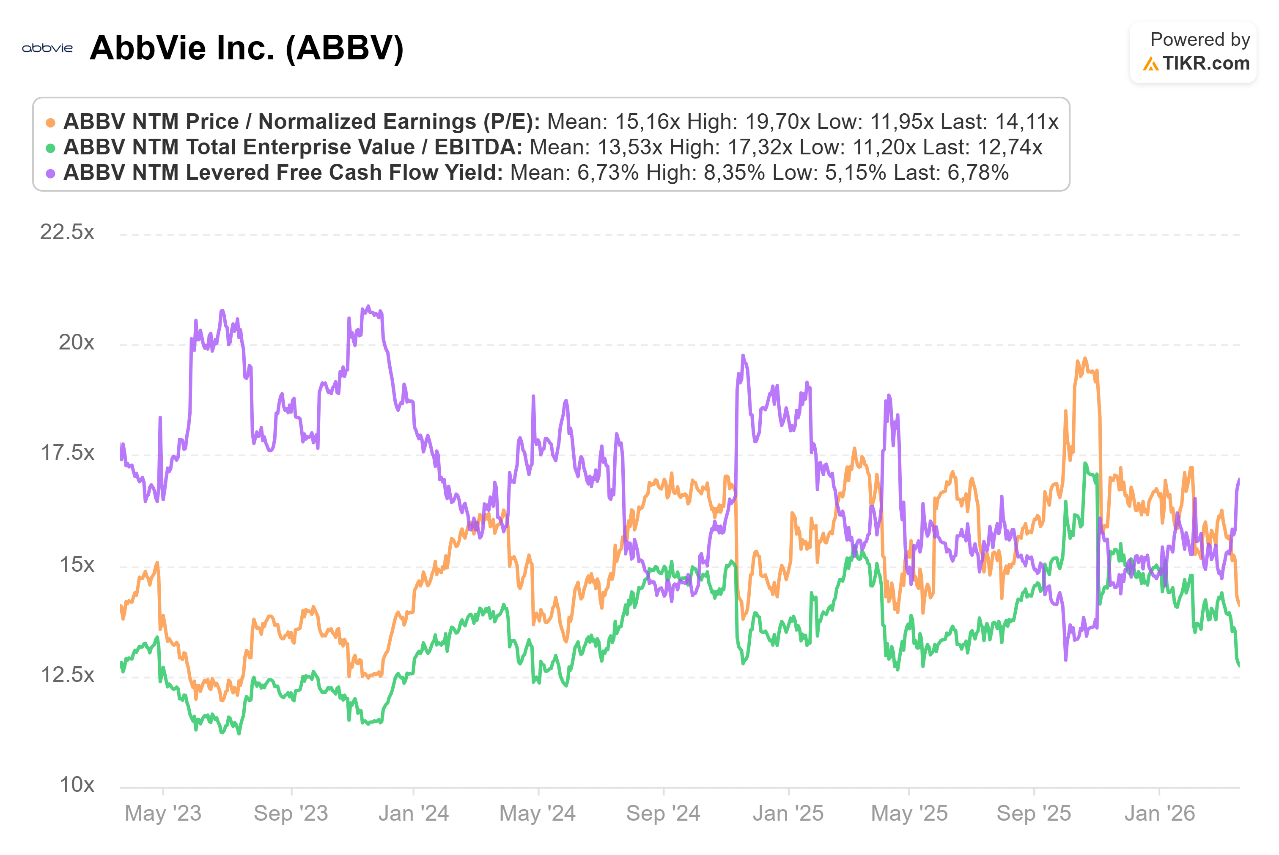
Following the recent market selloff, AbbVie now trades at roughly 14.1x NTM P/E, 12.7x NTM EV/EBITDA, and a 6.8% levered free cash flow yield. These levels are no longer demanding in absolute terms. In fact, the stock is now trading below its own 1-year average P/E of roughly 16.2x and also below the 3-year average of roughly 15.2x, while the apparent premium to the 5-year average should be interpreted carefully given how heavily that period was distorted by the Humira patent-cliff reset.
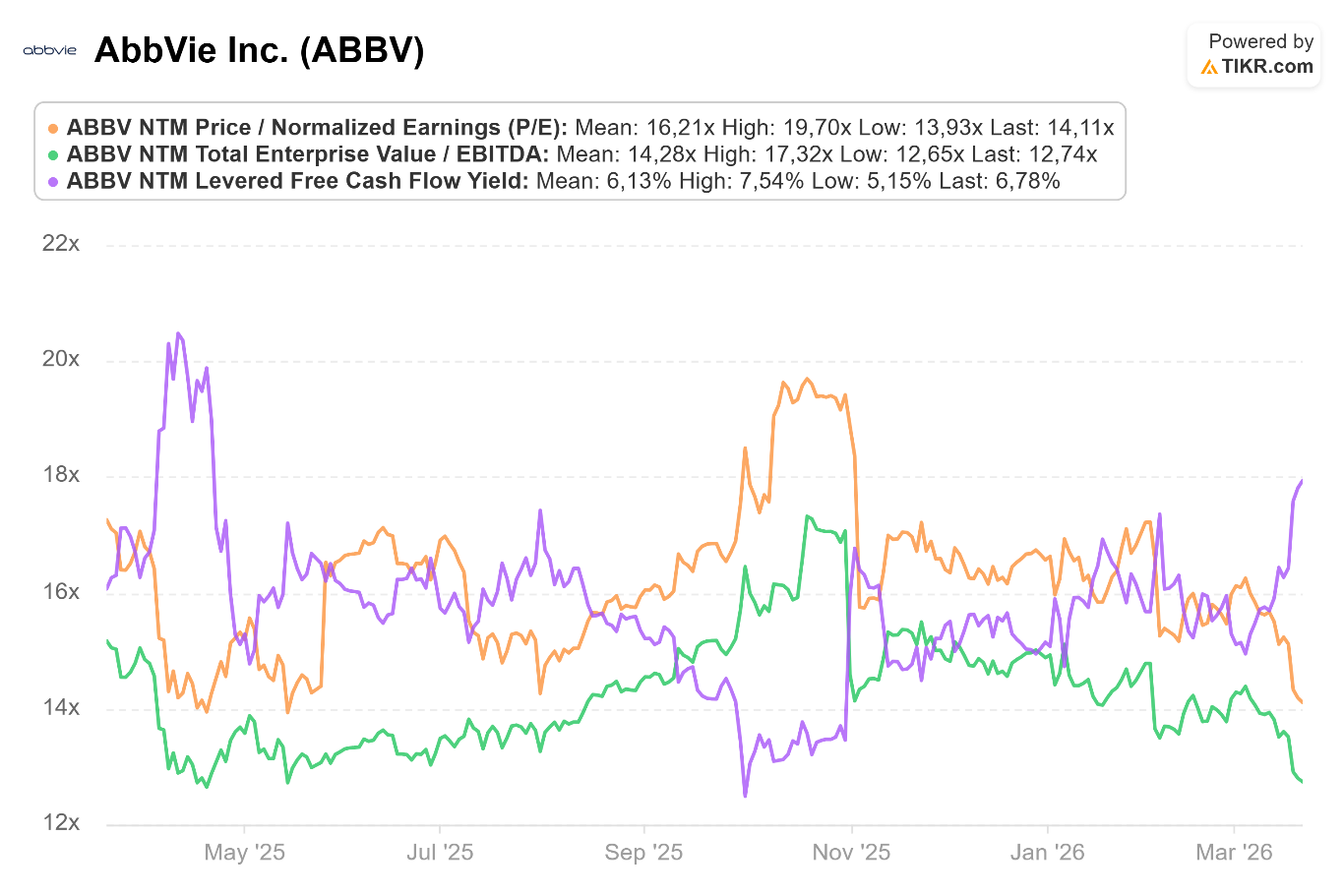
Put differently, AbbVie no longer looks like a stock being priced for a lingering post-Humira discount, it now looks more like a high-quality large-cap biopharma franchise trading at a valuation that is reasonable relative to its improved growth and visibility profile.
That view is supported by consensus estimates. Revenue is expected to rise from approximately $67.1bn in 2026E to $72.6bn in 2027E, implying continued high-single-digit top-line growth, while normalized EPS is expected to increase from roughly $14.54 to $16.12, equivalent to low-double-digit earnings growth.
This distinction is important: AbbVie is not simply a company expected to grow revenue at a solid pace, but a company that is also expected to translate that revenue growth into faster earnings expansion through margin improvement and a stronger mix.
Even while Humira remains in decline, the growth of Skyrizi and Rinvoq, supported by an increasingly relevant contribution from neuroscience, should allow the group to compound revenue at a high-single-digit rate and earnings at roughly 10–12%. Against that backdrop, it is reasonable to argue that AbbVie deserves to trade closer to the valuation range typically associated with a visible, durable growth compounder rather than a post-patent-cliff recovery story.
Using that framework, a valuation of around 16x forward earnings appears reasonable rather than aggressive. That multiple is broadly consistent with where the stock has traded over the last twelve months and would simply imply a normalization toward a fuller rating as the market increasingly prices AbbVie on the durability of its new earnings base rather than on legacy Humira concerns.
On a valuation basis, applying a 16x forward P/E multiple to 2027 normalized EPS of $16.12 implies an equity value of approximately $258 per share, while a 17x multiple implies a value of roughly $274 per share. This yields a valuation range of $258–274 per share, which we believe is a reasonable framework for the stock if AbbVie delivers the earnings trajectory currently embedded in consensus.
The lower end of the range reflects a scenario in which the market re-rates the shares only toward a fuller but still disciplined multiple, consistent with a business that has already bridged the Humira patent cliff and restored earnings visibility through Skyrizi and Rinvoq. The upper end reflects a more constructive scenario in which investors assign greater value to the durability of the new immunology profit base, the increasing strategic relevance of Neuroscience, and the optionality embedded in AbbVie’s broader pipeline. In that sense, the investment case does not require an aggressive re-rating to work, even a normalization toward 16x forward earnings would already support attractive upside, while 17x would be justified if execution continues to validate AbbVie as a durable multi-franchise growth platform.