
Ticker: ZETA
Price: 20 USD
Target: 27.50 USD
Company Overview
Zeta Global Holdings Corp. is a business-to-business (B2B) enterprise marketing technology company that provides large organizations with an omnichannel, data-driven cloud platform to improve customer acquisition, engagement and retention. Founded in 2007 and headquartered in New York, Zeta operates globally and serves enterprises and large brands, rather than individual consumers, across industries such as retail, financial services, travel, telecommunications and media.
Zeta’s customers use the company’s technology to analyze and activate their own first-party customer data, enriched by Zeta’s proprietary, permissioned identity and behavioral datasets, in order to automate marketing decision-making across owned and paid channels. Zeta does not offer consumer-facing products and does not sell services to individuals; its platform is designed exclusively for enterprise-scale marketing and customer intelligence use cases.
At the core of Zeta’s offering is the Zeta Marketing Platform, an end-to-end software solution that combines data unification, identity resolution and artificial intelligence to enable people-based, identity-driven marketing in a privacy-compliant environment.
Central to this architecture is Athena by Zeta, the company’s AI-powered decisioning and orchestration layer, which operationalizes real-time data and identity signals into automated marketing actions across channels. Rather than functioning as a static analytics tool, Athena acts as an intelligent agent that continuously prioritizes audiences, optimizes timing and allocates activation across owned and paid environments.
The platform processes billions of structured and unstructured signals to predict consumer intent, orchestrate marketing actions and measure incremental outcomes across the customer lifecycle.
Zeta monetizes its platform primarily through subscription-based software fees, volume-based utilization fees and data-driven services, resulting in a business model with a growing share of recurring, high-margin revenue. The company positions itself as a strategic partner for enterprises seeking to consolidate fragmented marketing stacks, reduce reliance on third-party point solutions and improve return on marketing investment through AI-driven automation and decisioning.
Zeta’s competitive advantage is rooted in its ownership of the data and decisioning layer that underpins all marketing activation, positioning the platform as durable infrastructure rather than a campaign-based solution.

Business Lines
Zeta Global Holdings Corp. operates through two closely integrated business lines: Direct Platform and Integrated Platform. While both leverage the same underlying data foundation and AI infrastructure, they differ materially in terms of revenue mix, cost structure and margin profile.
According to company disclosures, Direct Platform revenue accounted for approximately 75% of total revenues in the first 9 months of 2025 (70% in 2024), while Integrated Platform revenue represented the remaining 25% (30% in 2024). This revenue mix is a critical driver of Zeta’s profitability profile, as the two lines exhibit structurally different economics.
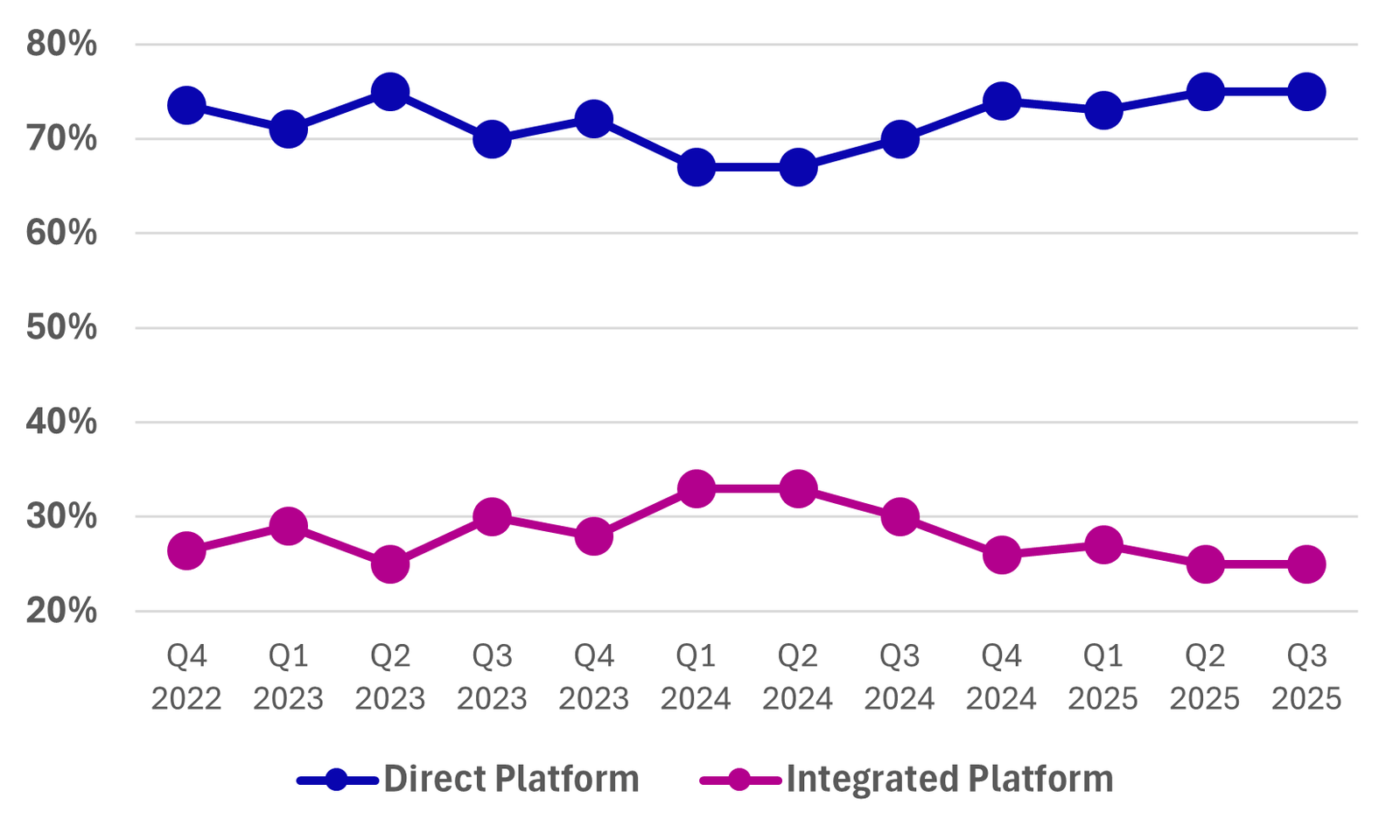
Direct Platform: High-Margin Core Business
The Direct Platform represents the core of Zeta’s business model and the primary driver of profitability. In this line, Zeta engages directly with enterprise customers, delivering software, data and AI-driven decisioning capabilities primarily through owned or controlled channels.
Direct Platform revenues are generated mainly from subscription-based platform fees, volume-based utilization fees and data-driven services, with limited reliance on third-party media inventory. As a result, this segment benefits from structurally higher gross margins and strong operating leverage, reflecting the software and data-centric nature of the offering and relatively low marginal costs associated with data processing, AI inference and platform usage.
Operationally, the Direct Platform is built around the Zeta Marketing Platform (ZMP), which serves as the central operating system used by enterprise marketers to manage data unification, decisioning, orchestration and performance measurement across the customer lifecycle. This is supported by Zeta’s Consumer Data Platform (CDP+), a unified data layer that consolidates first-party customer data with Zeta’s permissioned identity graph and behavioral signals, enabling real-time identity resolution and audience activation. AI-driven decision engines analyze these signals to predict consumer intent, prioritize audiences, optimize timing and automate marketing actions across channels. Activation is often executed through direct channels such as email, messaging and other owned delivery layers, where Zeta controls the technology stack and minimizes third-party pass-through costs.

Growth in the Direct Platform is driven by deeper customer penetration, expansion across multiple use cases and increasing platform utilization over time, making it the primary contributor to Zeta’s expanding EBITDA and free cash flow generation.
Integrated Platform – Extension and Activation Layer
The Integrated Platform extends Zeta’s data, identity and AI-driven decisioning capabilities beyond its owned environment, enabling enterprise customers to activate marketing programs across third-party channels such as the open web, social platforms and connected TV.
From an economic perspective, this business line carries a lower margin profile due to its cost structure. While it leverages the same proprietary data foundation and AI infrastructure as the Direct Platform, a significant portion of Integrated Platform revenue is associated with media spend passed through to third-party publishers, platforms and inventory owners under revenue-sharing, CPM, CPC or similar arrangements. As a result, incremental revenue in this segment is more closely linked to variable media costs, limiting operating leverage relative to the Direct Platform.
Operationally, the Integrated Platform is supported by Zeta’s Demand-Side Platform (DSP), which enables programmatic media buying and real-time bidding across external inventory. This is complemented by API-based integrations with major social, search and connected TV platforms, allowing Zeta’s audiences, identity resolution and decisioning signals to be deployed on environments such as Meta, Google/YouTube and broader CTV ecosystems. Zeta’s Identity Graph plays a critical role in maintaining consistent, privacy-compliant audience recognition across devices and channels, supporting targeting, attribution and performance measurement even in third-party environments.
Strategically, the Integrated Platform serves as a key enterprise adoption and expansion layer, often acting as an entry point for large, complex customers seeking a unified view across fragmented media channels. Over time, Zeta aims to migrate these customers toward deeper adoption of its Direct Platform capabilities, thereby improving overall revenue mix, margin quality and long-term profitability.
Industry Analysis
The global marketing technology (MarTech) and advertising technology (AdTech) landscape is often treated as a single, homogeneous market. In practice, however, the industry has undergone a structural decoupling into two fundamentally different ecosystems: consumer-facing media platforms and enterprise-focused marketing infrastructure providers. While both operate within the broader advertising value chain, they differ materially in customers, revenue models, cost structures and sources of competitive advantage.
On one side of the spectrum are the so-called « walled gardens », exemplified by Meta Platforms and Alphabet, which function primarily as media arbitrage platforms. These companies monetize proprietary user attention through closed-loop advertising auctions, selling access to inventory within their own ecosystems. Value creation in this model is driven by reach, engagement and auction efficiency, with advertisers largely dependent on platform-owned data, algorithms and measurement frameworks. Revenues are directly tied to media spend and tend to be cyclical and episodic: when advertising budgets are reduced, monetization declines accordingly.
This structural cyclicality was clearly visible during the 2022 advertising downturn, when rising inflation and tightening financial conditions led to a sharp slowdown in consumer-facing digital advertising spend, materially impacting media-centric platforms such as Meta Platforms and Alphabet. During the same period, enterprise-focused marketing infrastructure providers exhibited markedly different behavior. Zeta Global, in particular, demonstrated notable resilience, sustaining, and in some quarters accelerating, revenue growth despite the broader contraction in advertising budgets. This divergence highlights the fundamentally different demand drivers underpinning enterprise B2B marketing technology, where spend is increasingly tied to long-term data infrastructure, identity resolution and operating efficiency rather than discretionary media budgets.
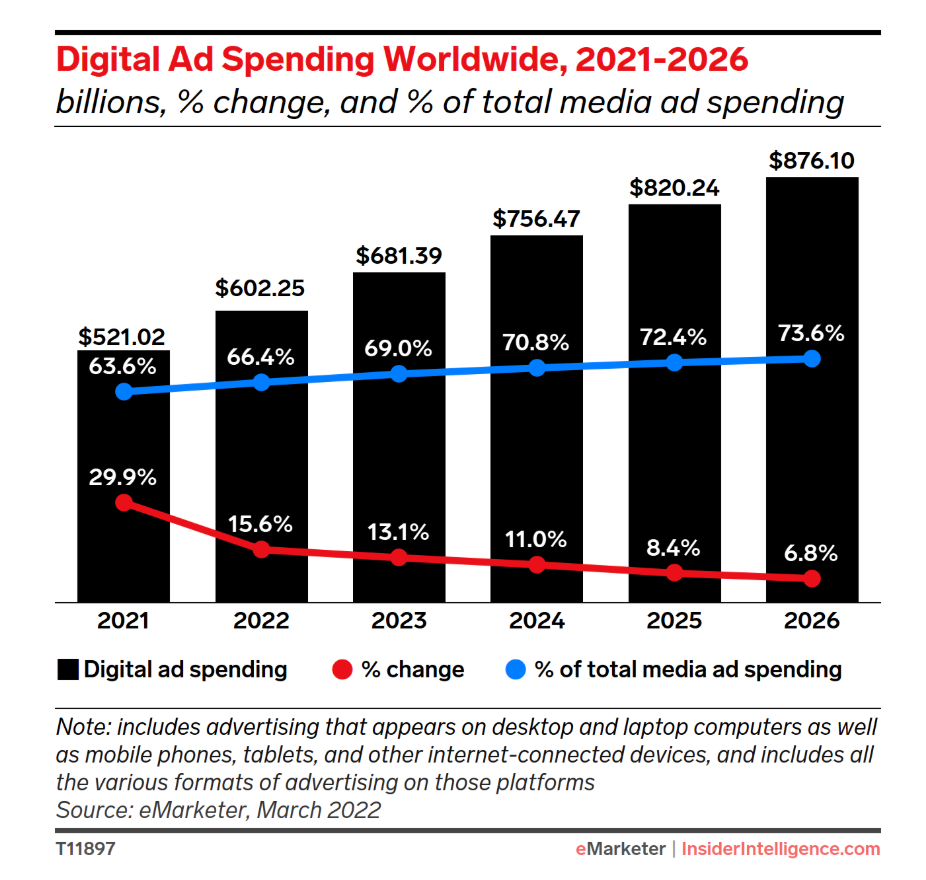
In parallel, a distinct B2B enterprise marketing technology market has emerged, addressing a fundamentally different problem. Rather than competing for consumer attention, this segment competes for the ownership and control of customer intelligence. Enterprise marketers increasingly seek to unify, govern and activate their own first-party data across a fragmented set of owned and paid channels, reducing reliance on third-party platforms as the sole source of targeting and measurement. This shift has been accelerated by structural forces such as privacy regulation (GDPR, CCPA), the deprecation of third-party cookies, signal loss across the open web and the growing strategic value of first-party data.
A key distinction between the B2C and B2B segments lies in how identity is established. Consumer platforms operate in a logged-in environment, where user identity is probabilistic but persistent within a single application or ecosystem. By contrast, the enterprise B2B market operates on identity resolution, where value is derived from linking disparate data signals, CRM records, offline transactions, web behavior, email interactions and device signals, into a single, persistent deterministic identity that remains under the control of the brand.
In this context, the ad placement itself is commoditized; the strategic asset is the ability to resolve identity across channels, devices and environments, ensuring that customer data remains a long-term enterprise asset rather than being fragmented across publishers and platforms.
The economics of enterprise marketing infrastructure are governed by data gravity rather than media volume. In the B2C media model, revenue is inherently episodic: when a brand stops spending on a platform, traffic and value creation cease. In the B2B enterprise model, infrastructure providers increasingly act as a system of record and system of intelligence for customer data.
Within the enterprise marketing infrastructure paradigm, however, the concept of “system of intelligence” is not homogeneous across vendors. While several publicly listed platforms operate within the broader enterprise MarTech ecosystem, their core value propositions differ materially.
Workflow-centric platforms such as Salesforce, Adobe and The Trade Desk primarily focus on improving marketing execution efficiency. Their objective is to automate and standardize workflows, reducing operational complexity and cost across campaign planning, activation and reporting. In this model, value creation is driven by process optimization rather than by a fundamental improvement in customer-level decision intelligence.
By contrast, channel-centric platforms such as Braze, Klaviyo and Criteo are designed to enhance the effectiveness of specific communication channels. These platforms optimize engagement and conversion within individual channels, such as email, SMS or programmatic display, but remain structurally limited in their ability to orchestrate decisions across the full customer journey.
Zeta Global Holdings Corp. occupies a fundamentally different position. Rather than optimizing workflows or individual channels, Zeta is built around a proprietary, omnichannel identity graph that continuously ingests behavioral signals across owned and paid environments, including web activity, transactional data and media interactions.
These signals are unified at the individual level and processed through predictive AI models to determine not only how to execute a campaign, but which channel, message and timing are most likely to convert for each specific customer segment.
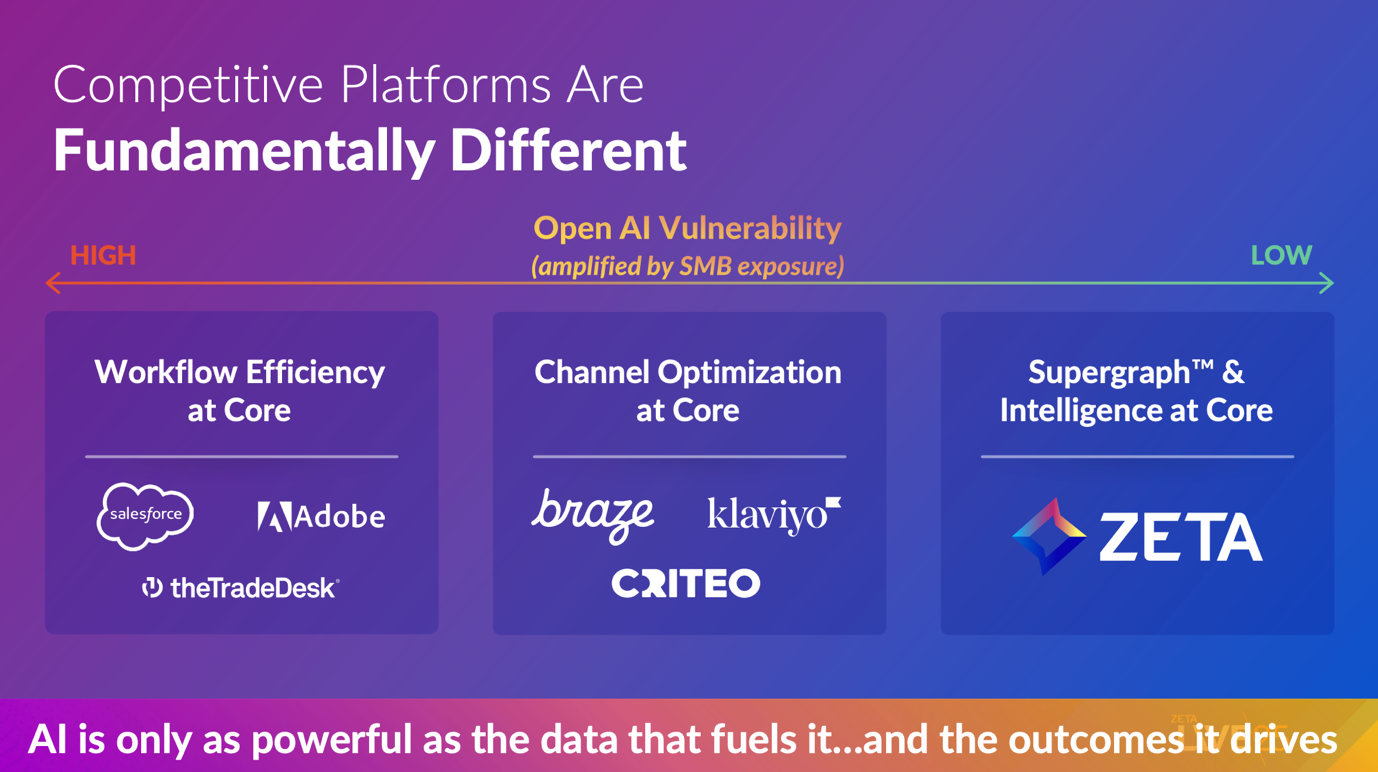
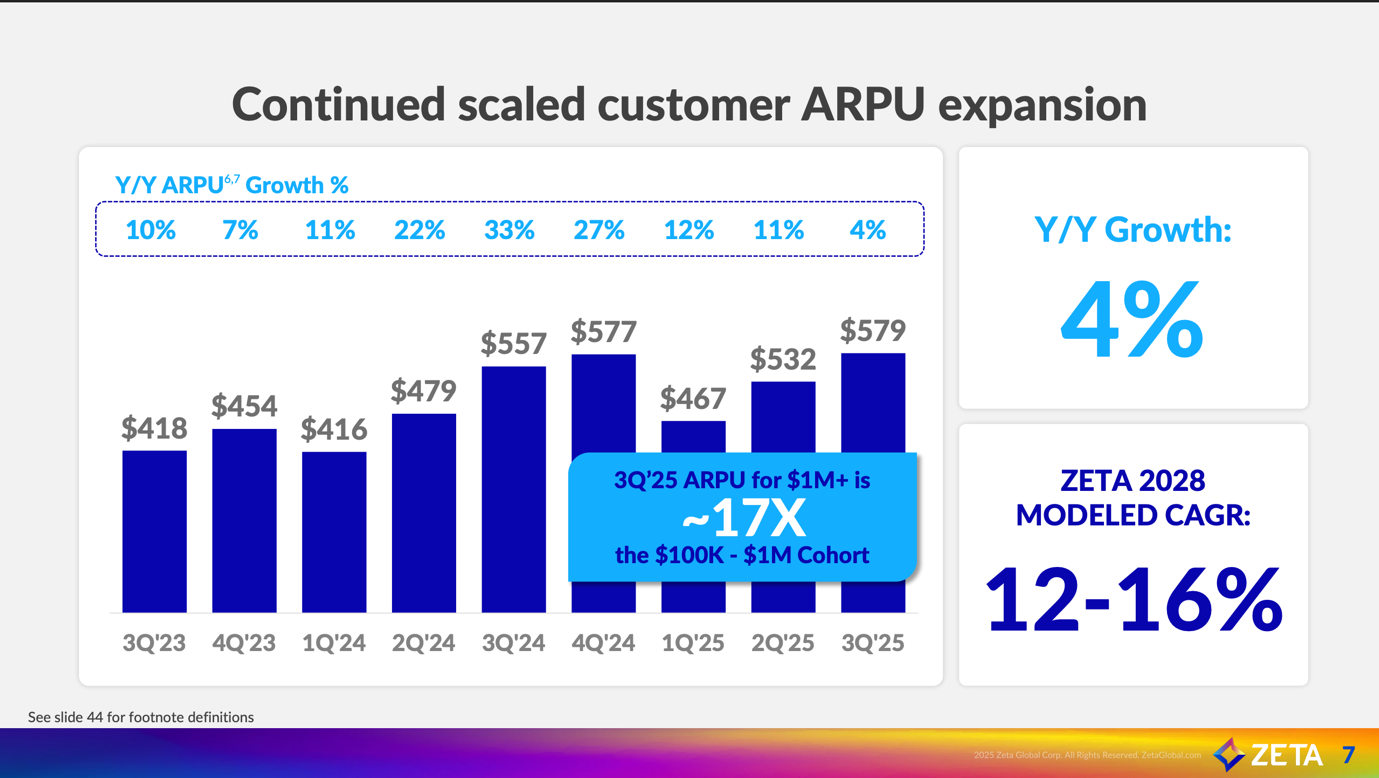
As a result, Zeta functions as a learning system whose performance improves as data density and usage increase over time. This data-centric, predictive architecture creates a self-reinforcing feedback loop: improved decision accuracy drives higher return on advertising spend for clients, which in turn leads to deeper platform adoption, multi-use-case expansion and rising customer spend. This dynamic explains Zeta’s historical ability to grow both its customer base and ARPU (average revenue per customer, driven by deeper platform adoption and expanding use cases) over time, while delivering structurally higher growth and durability than peers focused on workflow efficiency or single-channel optimization.
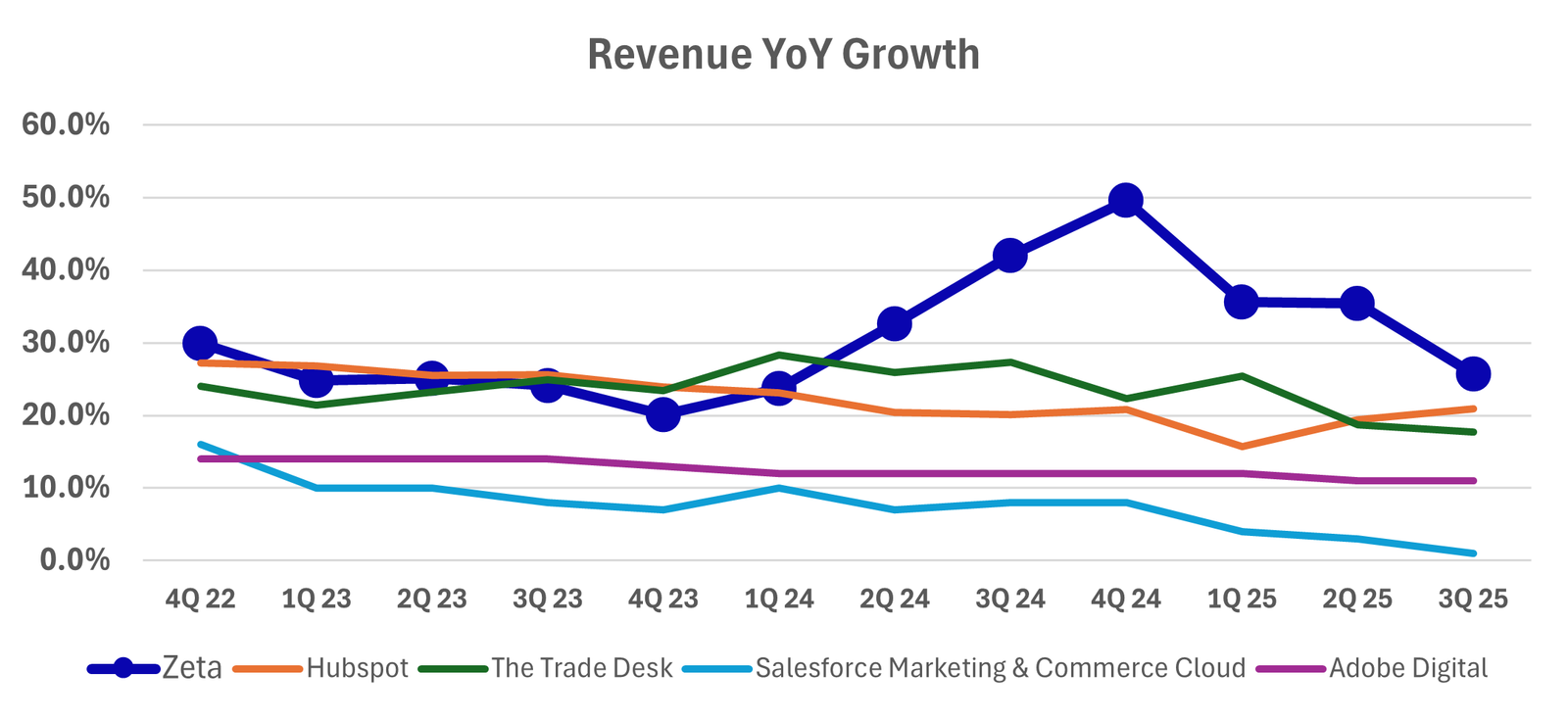
This structural differentiation is reflected in relative revenue growth performance across publicly listed peers. Despite operating at a smaller absolute scale, Zeta Global has consistently delivered higher YoY revenue growth than workflow-centric platforms such as Salesforce Marketing & Commerce Cloud and Adobe Digital, as well as media- and channel-centric players like The Trade Desk and HubSpot. Importantly, this outperformance has persisted through multiple phases of the advertising cycle, including periods of macro-driven budget pressure. While scale effects partially explain growth differentials, the consistency and magnitude of Zeta’s relative growth support the view that its data-centric, predictive architecture enables structurally higher growth durability compared to peers focused on workflow efficiency or single-channel optimization.
Once an enterprise integrates its first-party data into an identity graph and decisioning layer, switching costs increase materially. The vendor relationship shifts from discretionary campaign spend to R&D-like operating expenditure, where budgets are allocated to intelligence, automation and long-term efficiency rather than short-term reach. As a result, revenue models in this segment are characterized by recurring software fees, utilization-based pricing and high customer lifetime value, with materially lower churn than media-centric platforms.
The deprecation of third-party cookies and tightening privacy regulation have further bifurcated the market. Media-centric players face increasing challenges in maintaining targeting accuracy as traditional tracking mechanisms deteriorate. In contrast, infrastructure-centric B2B providers have benefited from the shift, as enterprises seek privacy-compliant solutions to recognize and activate customers without reliance on third-party tracking.
By leveraging first-party data enrichment, clean-room architectures and proprietary identity graphs, these platforms transform compliance from a cost center into a competitive moat, enabling persistent customer recognition while remaining aligned with regulatory constraints.
Competitive advantage in the enterprise B2B marketing technology segment is not defined by reach or time spent, but by integration depth and signal density. Vendors compete on how deeply they are embedded across the marketing stack, how effectively they unify data sources and how intelligently they orchestrate actions across owned and paid channels. Precision, persistence and interoperability replace scale as the primary success factors.
The emergence of AI-driven decisioning and autonomous agents further reinforces this dynamic. The goal is no longer to provide dashboards for human marketers, but to deliver self-optimizing systems capable of managing complex, real-time orchestration across channels, continuously learning from outcomes and improving efficiency over time.
Market Profile and Industry Positioning
Within the enterprise B2B segment of the marketing technology landscape, Zeta Global Holdings Corp. operates at the intersection of customer data infrastructure, identity resolution and AI-driven marketing decisioning. This segment sits structurally above media execution layers and below consumer-facing advertising platforms, addressing a different buyer, budget and set of technical requirements than B2C media ecosystems such as Meta Platforms or Alphabet.
From a market architecture perspective, the enterprise marketing stack can be broadly decomposed into three functional layers: data unification and identity, decision intelligence, and channel activation. This structural shift toward data unification and first-party ownership is reflected in the rapid growth of the enterprise Customer Data Platform market.
The global customer data platform market size was estimated at USD 8.26 billion in 2025 and is projected to reach USD 58.41 billion by 2033, growing at a CAGR of 27.8% from 2026 to 2033.

B2C platforms typically integrate all three within closed environments, monetizing reach and engagement. By contrast, the B2B enterprise market is defined by open, interoperable architectures, where value accrues to vendors capable of acting as a system of record and system of intelligence across heterogeneous data sources and execution channels.
Within this context, Zeta is positioned as a horizontal infrastructure provider, rather than a point solution. Its addressable market is not defined by ownership of advertising inventory, but by the ability to ingest, resolve and operationalize first-party customer data at scale, enabling consistent decision-making across owned and paid environments. This positions the company closer to enterprise data and analytics budgets than to traditional media buying budgets, with purchasing decisions driven by CIO-, CDO- and CMO-level stakeholders rather than campaign-level performance marketers.
The competitive landscape in this segment is fragmented and differentiated by depth of integration and technical scope rather than reach. Identity-centric vendors such as LiveRamp focus primarily on data connectivity and identity linkage, serving as interoperability layers between data owners and activation endpoints. The increasing centrality of identity resolution as a foundational layer is evidenced by the sustained growth of the digital identity solutions market.
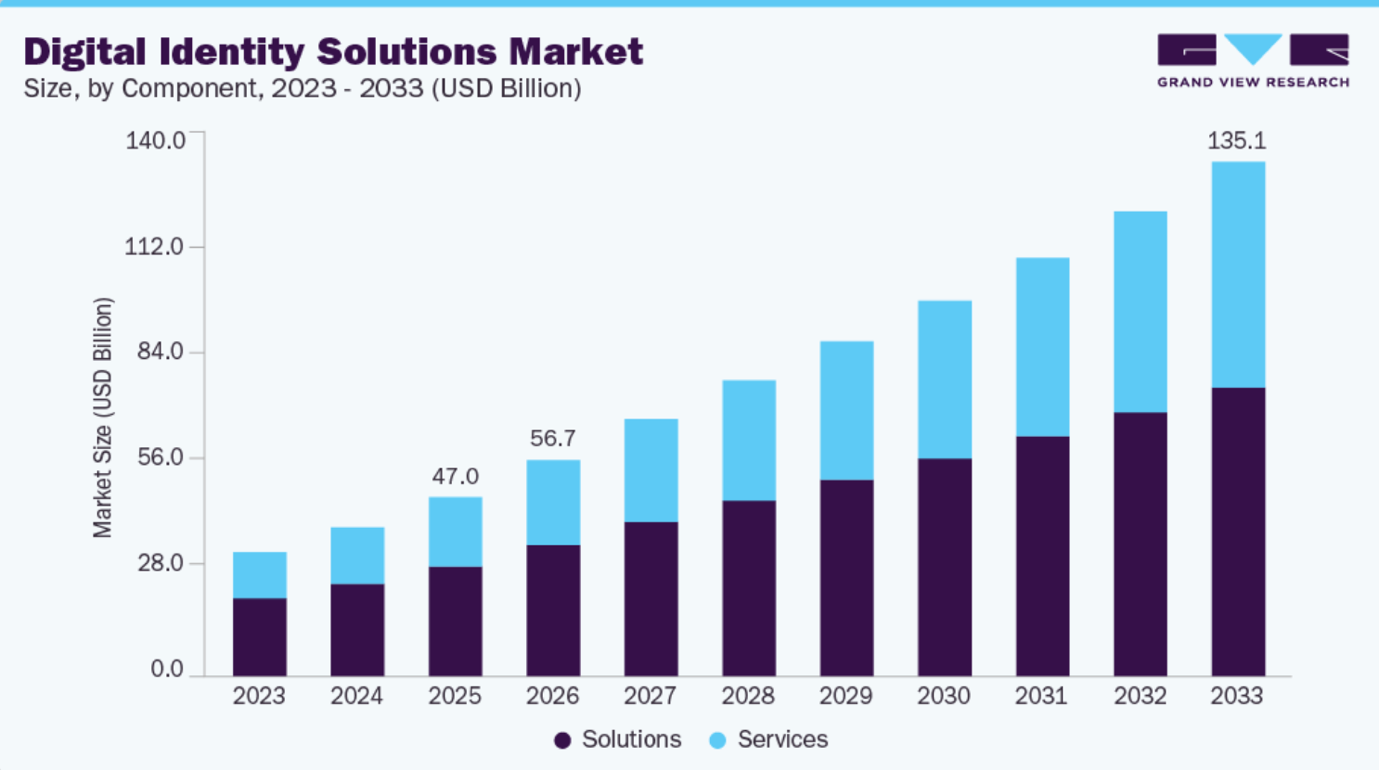
Activation-oriented platforms such as The Trade Desk concentrate on execution efficiency within paid media, with identity and decisioning serving the needs of media optimization rather than enterprise-wide intelligence. Broader marketing cloud providers such as Adobe and Salesforce address customer experience and workflow management, but often rely on modular, acquisition-driven architectures that separate data management, analytics and activation across distinct products.
Zeta’s market positioning is defined by its attempt to collapse these layers into a unified decision intelligence stack, combining deterministic identity, real-time data processing and AI-driven orchestration within a single platform.
At the top of the stack, AI-driven decision intelligence acts as the economic multiplier of data gravity, a dynamic mirrored by the accelerating growth of AI adoption in enterprise marketing.
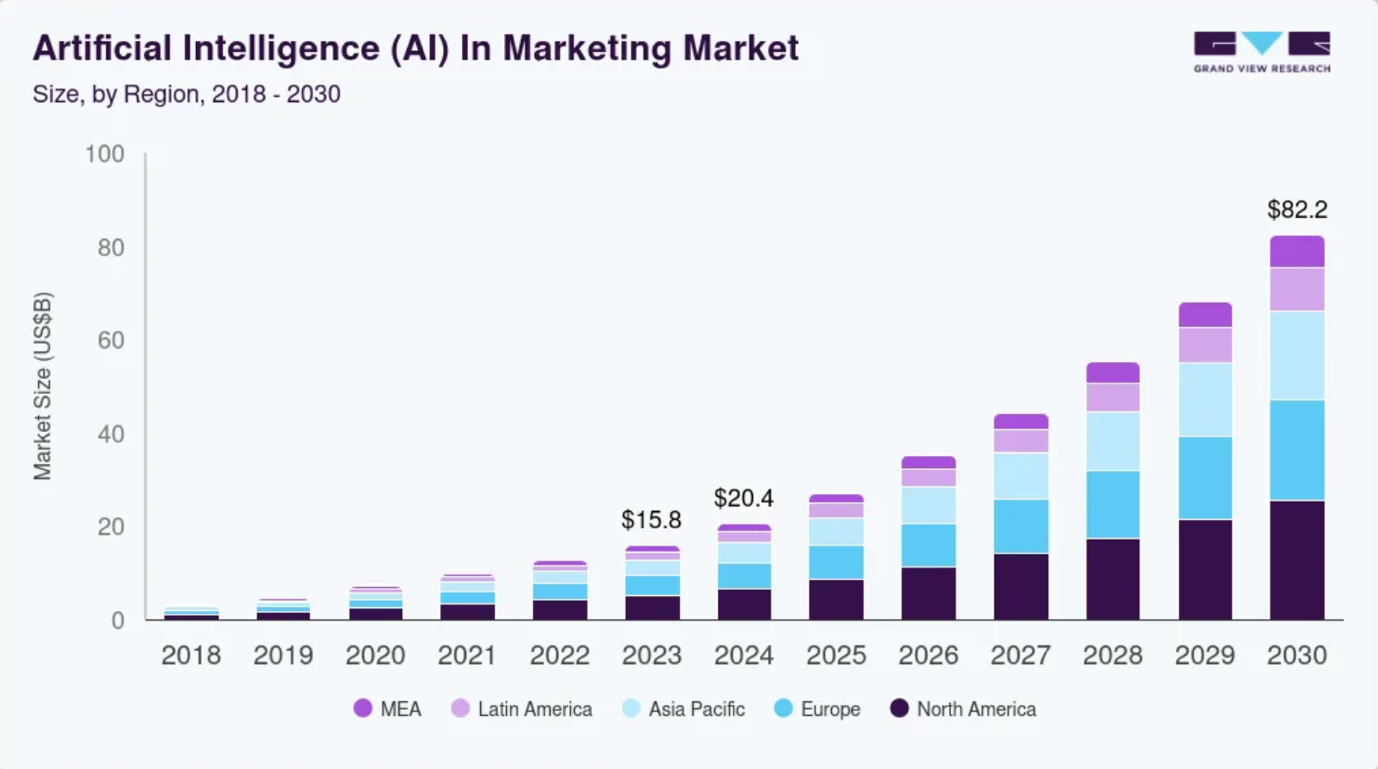
While companies operating in this segment typically represent only a modest share of overall global advertising expenditure, they compete in a high-value subsegment where switching costs, data gravity and long-term platform adoption are more important determinants of competitive success than media scale. As a result, relative market share is less indicative of competitive strength than penetration within large enterprise accounts and control over customer data and decisioning workflows.
Within this framework, platforms that expand their footprint among large enterprise customers benefit from increasing data gravity driven by higher data volumes, greater signal diversity and more frequent event ingestion. This creates a self-reinforcing feedback loop in which improved data density enhances AI-driven decisioning, leading to higher customer ROI, deeper platform adoption and additional data generation over time. Importantly, this data gravity is centered on clients’ first-party data rather than third-party platforms, reinforcing switching costs and long-term platform stickiness.
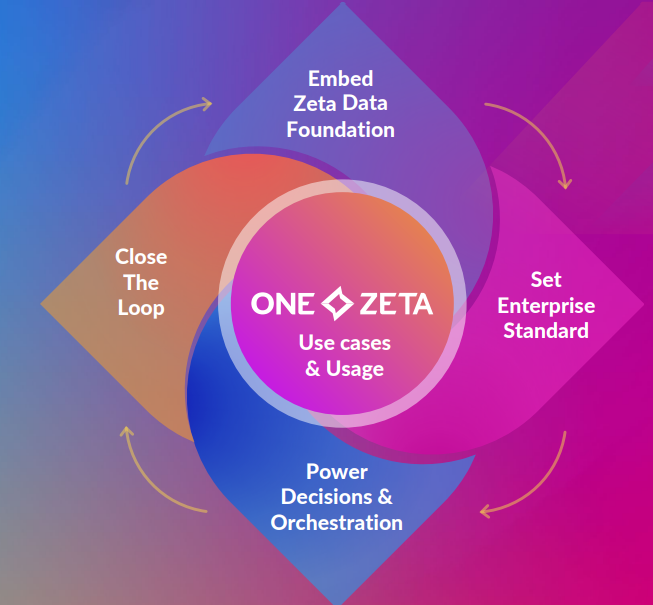
Data gravity should be viewed as a structural demand driver rather than a discrete market. As enterprises centralize customer data and decisioning workflows, spending increasingly shifts toward platforms that benefit from cumulative data scale and integration depth, segments that are consistently growing at high-teens to low-twenties rates.
Recent Share Price Performance
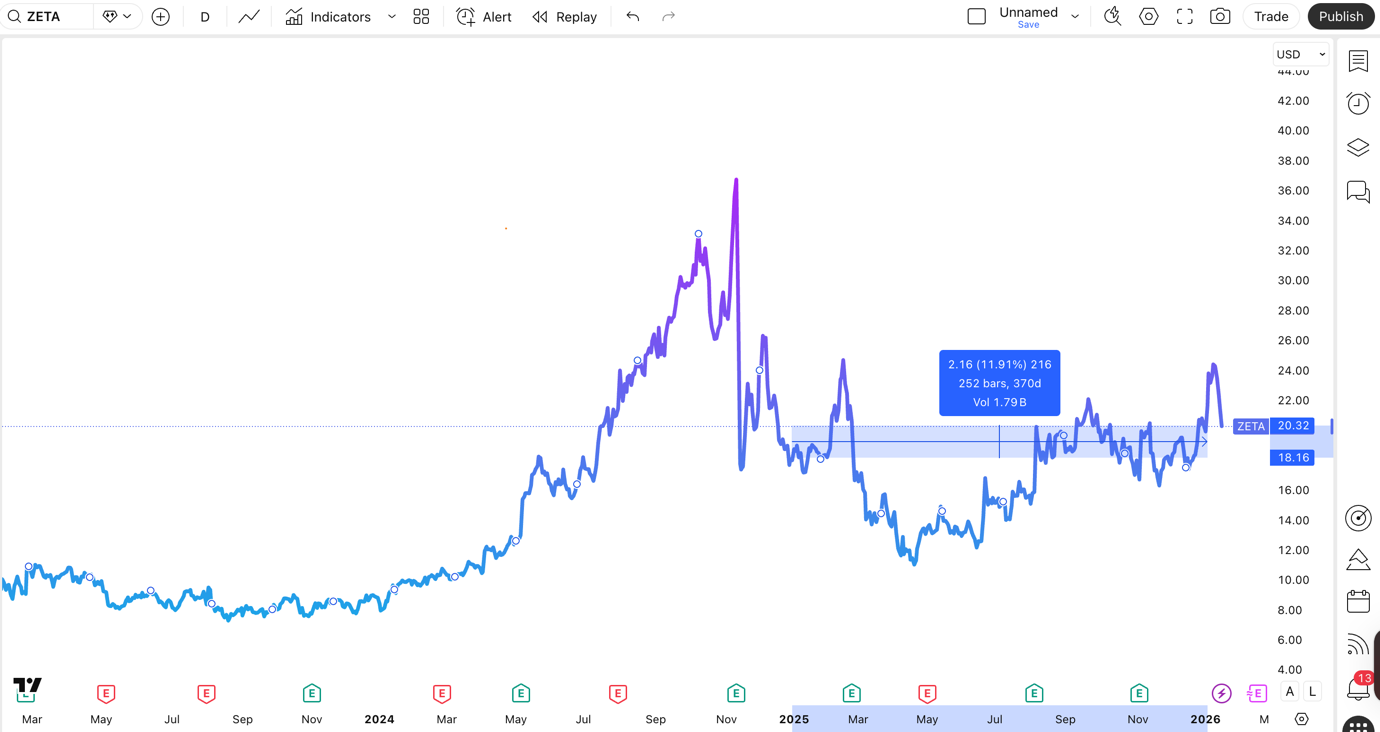
Zeta Global’s share price performance over the past two years reflects a combination of exceptional, non-recurring catalysts and an ongoing reassessment of the company’s underlying fundamentals. In 2024, the stock delivered a strong annual appreciation of approximately 128%, a figure that masks significantly higher intra-year volatility. During the year, Zeta’s shares appreciated by roughly 366% from trough to peak, reaching a high of approximately $36 in November 2024, coinciding with the U.S. presidential election period. This sharp re-rating was supported by a surge in political and issue-based digital spending, which disproportionately benefited data-driven, omnichannel marketing infrastructure providers exposed to targeting, identity resolution and direct activation channels.
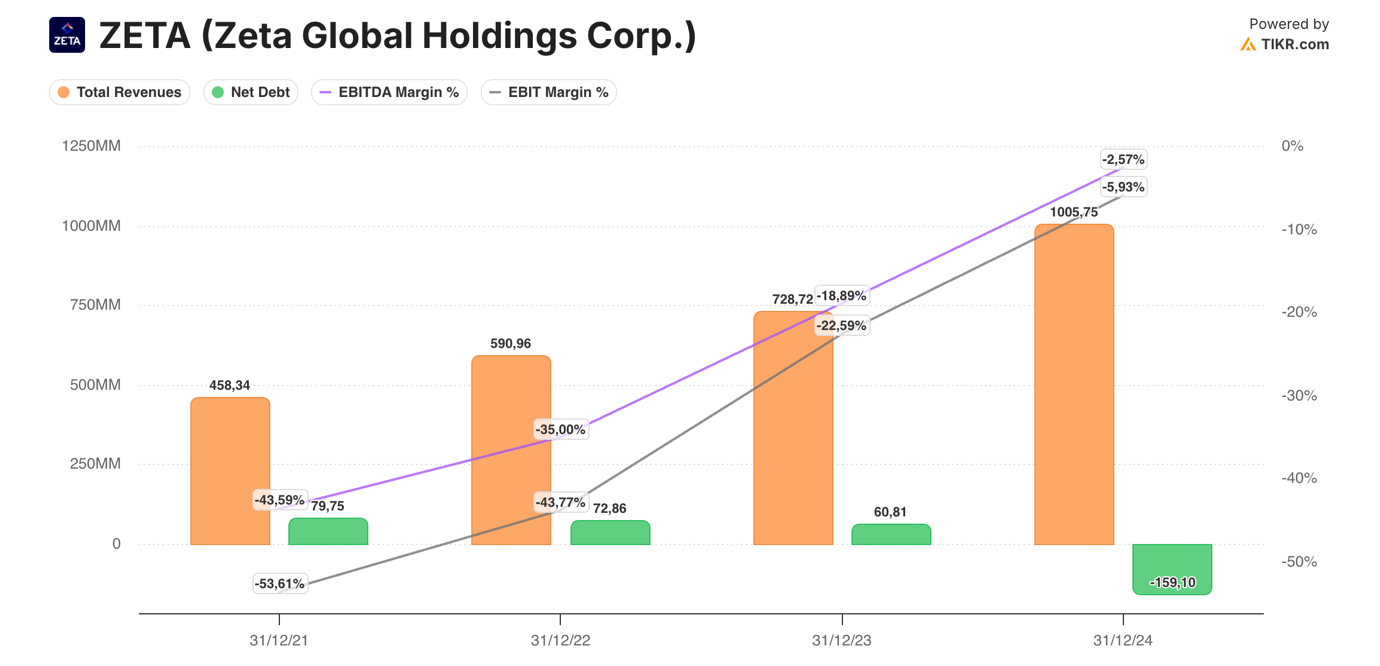
Importantly, the 2024 rally was not solely driven by cyclical election-related tailwinds. Over the course of the year, Zeta also delivered a visible improvement in its financial profile, completing a meaningful deleveraging path and transitioning from a net debt position to a net cash position by year-end. This balance sheet strengthening reduced perceived financial risk and increased equity optionality at a time when investors were increasingly focused on cash flow sustainability and balance sheet quality. In parallel, the company achieved a pronounced improvement in profitability metrics. While margins remained negative in absolute terms, both EBITDA and EBIT margins followed a clear upward trajectory, reflecting operating leverage, favorable revenue mix dynamics and improved cost discipline. This margin inflection played a critical role in shifting investor perception from a pure growth narrative toward one centered on earnings quality and scalability, enabling an initial re-rating of valuation multiples that amplified equity upside during the year.
Following the conclusion of the election cycle, the stock retraced a portion of its peak gains as political advertising budgets normalized and investors reassessed the sustainability of election-related demand. This pullback primarily reflected the unwind of a temporary catalyst rather than a deterioration in operating performance, with Zeta nonetheless closing 2024 with a materially higher valuation and strong full-year returns.
In contrast, 2025 has been characterized by a more subdued equity performance, with the shares appreciating by approximately 11–12% year-to-date. This phase appears to represent a period of consolidation, as the market shifts its focus away from event-driven upside and toward validation of the company’s medium-term earnings power. Investor attention has increasingly centered on the durability of revenue growth, margin expansion and free cash flow generation, as well as continued progress on balance sheet optimization. As a result, recent share price dynamics suggest a transition from a catalyst-led re-rating toward a fundamentals-driven valuation framework.
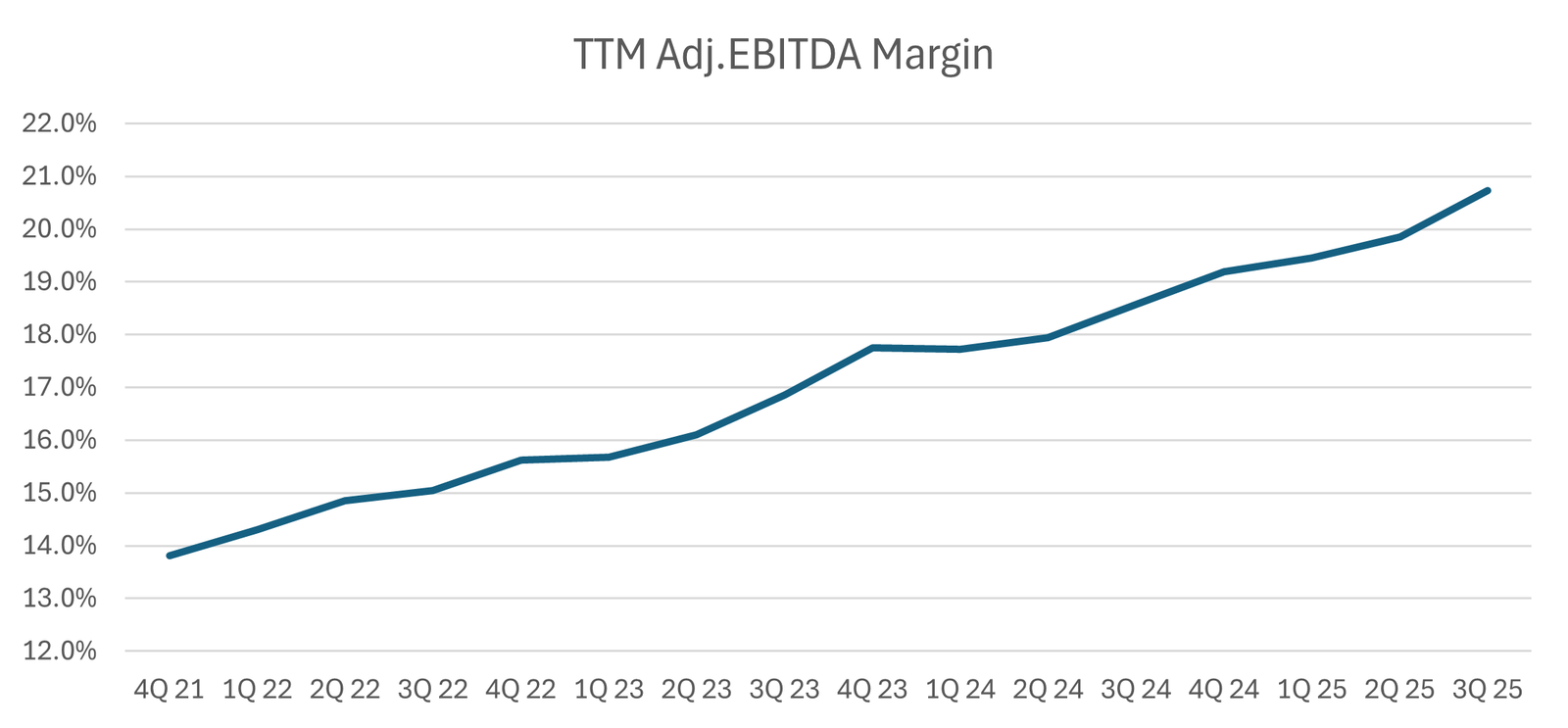
Profitability metrics showed a pronounced inflection in 3Q25, reinforcing the view that recent equity performance is increasingly supported by fundamentals rather than temporary demand drivers. Quarterly adjusted EBITDA increased 46% YoY to $78 million, with the adjusted EBITDA margin expanding by 320 basis points to 23.2%. This margin expansion reflects a combination of operating leverage, a favorable mix shift toward higher-margin Direct Platform revenues, and continued discipline on operating costs, underscoring the scalability of Zeta’s software- and data-driven business model. Free cash flow generation also accelerated meaningfully, with 3Q free cash flow growing 83% YoY and reaching a 14% margin, signaling improving cash conversion alongside earnings growth.
Beyond headline revenue and margin expansion, Zeta’s recent results highlight a critical structural driver of future profitability: the continued expansion of its scaled customer base. In 3Q25, the number of Super Scaled Customers, defined as clients generating over $1 million in TTM revenue, reached 180, increasing by 12 QoQ and 25% YoY. This marks the 18th consecutive quarter of sequential scaled customer growth, underscoring the durability of enterprise adoption and wallet share expansion.
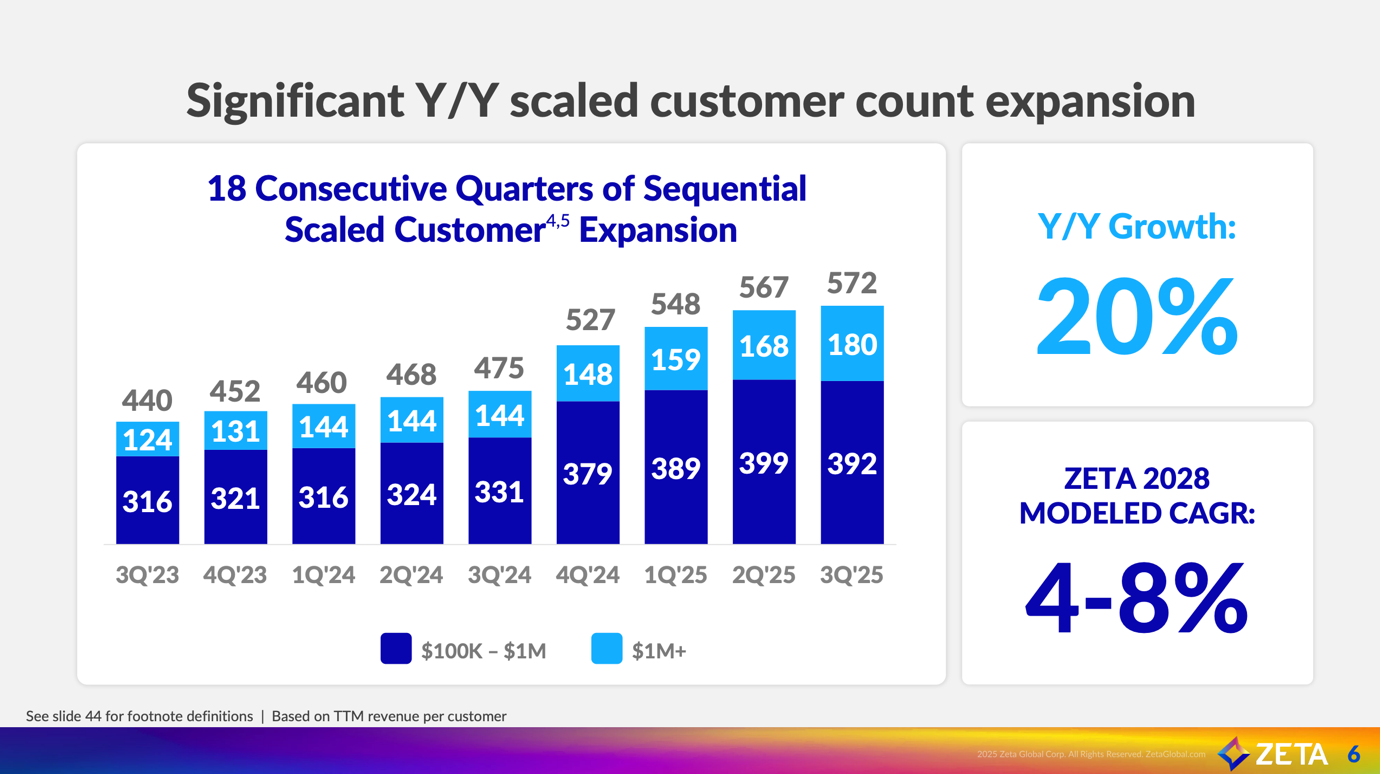
This metric is particularly relevant in the context of Zeta’s business model. As customers scale their spend on the platform, incremental revenue is increasingly driven by higher utilization of data, AI-driven decisioning and orchestration capabilities rather than proportional increases in cost. As a result, scaled customer growth acts as a leading indicator of operating leverage, supporting sustained margin expansion over time. The rising mix of large, deeply embedded enterprise customers reinforces the visibility and quality of future cash flows, further strengthening the company’s long-term profitability profile.
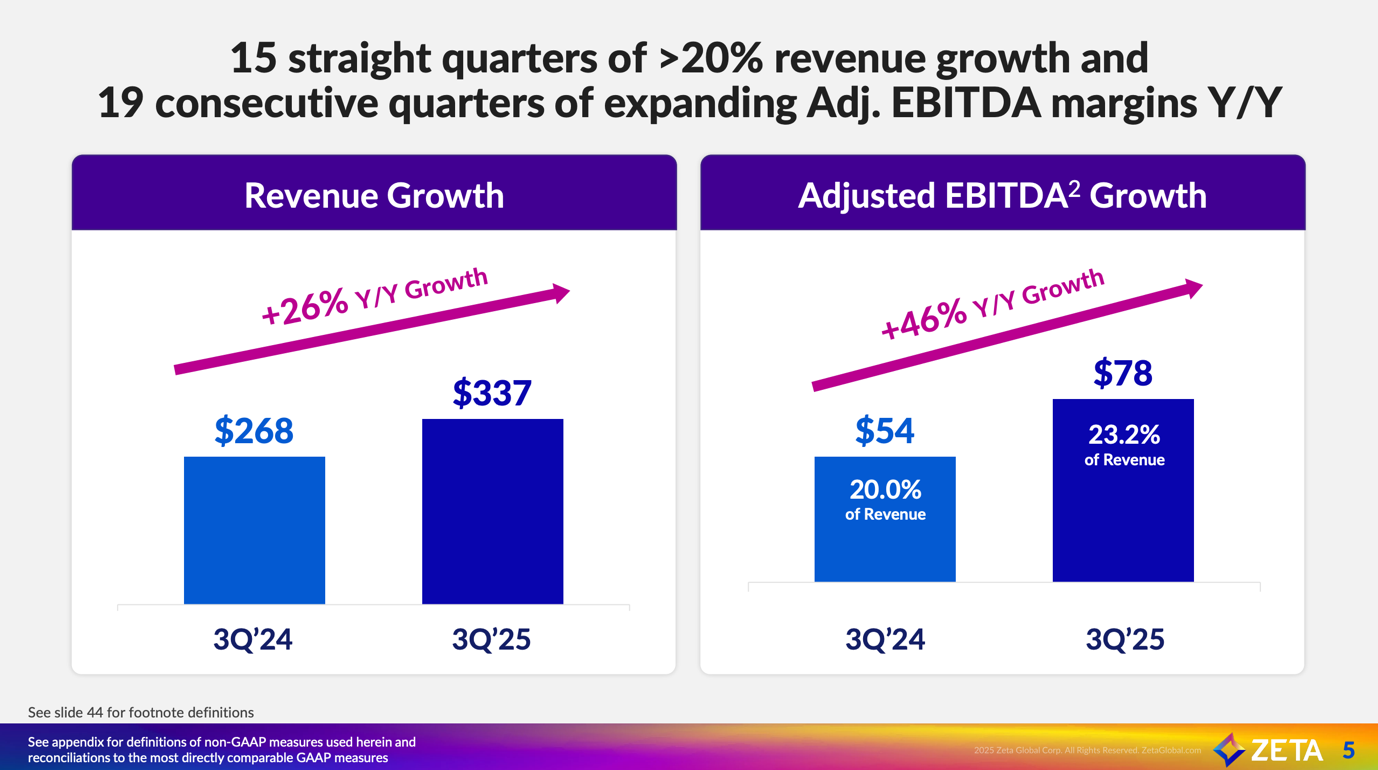
Importantly, these results were achieved alongside sustained top-line momentum. Revenue in 3Q25 grew 26% YoY, or 28% when excluding political candidate revenue and LiveIntent (an email-based advertising business acquired in 2024 with a more media-like, pass-through revenue profile), highlighting the durability of underlying enterprise demand beyond election-related or non-core contributions. Growth quality was further evidenced by continued expansion at the high end of the customer base, with the number of Super Scaled Customers reaching 180, up 12 QoQ and 25% YoY. This metric is particularly relevant, as these customers typically drive higher lifetime value, deeper platform penetration and superior margin contribution.
Management attributes this accelerated growth trajectory primarily to technological differentiation, particularly in artificial intelligence–driven decisioning. The recent launch of Athena by Zeta, a conversational, agentic AI interface, alongside strong customer engagement following Zeta Live and the continued adoption of the One Zeta platform, reinforces the company’s positioning as an AI-led marketing intelligence provider. These initiatives support higher customer engagement, broader use-case adoption and increased wallet share, translating into both revenue growth and margin leverage.
Looking ahead, updated full-year guidance reflects continued confidence in this execution path, with management raising expectations across revenue, adjusted EBITDA and free cash flow. Notably, current guidance excludes any contribution from Marigold’s enterprise software business, the acquisition of which is expected to close in 4Q25. Upon closing, the company plans to provide incremental guidance for 2025 and 2026, with the transaction potentially adding scale, complementary enterprise capabilities and additional cross-selling opportunities within Zeta’s core B2B customer base.
Financial Risk
Zeta Global’s financial risk profile has improved materially over the past several years, reflecting the transition from a growth phase supported by balance sheet leverage to a model increasingly funded by internally generated cash flows. With revenues surpassing $1 billion in 2024 and adjusted EBITDA showing a clear upward trajectory, the company has reached a scale where capital structure discipline and cash flow sustainability have become central to the investment thesis.
A key development has been the evolution of Zeta’s net debt position. Between 2021 and 2023, the company operated with a moderate level of net debt, consistent with its investment phase and platform expansion strategy. In 2024, however, Zeta completed a visible deleveraging path, transitioning from a net debt position to a net cash position by year-end. This shift materially reduced financial leverage and lowered balance sheet risk, effectively removing debt servicing as a structural constraint on growth. As a result, leverage metrics such as Net Debt to EBITDA have moved from positive territory to effectively zero or negative levels, significantly strengthening the company’s financial flexibility.
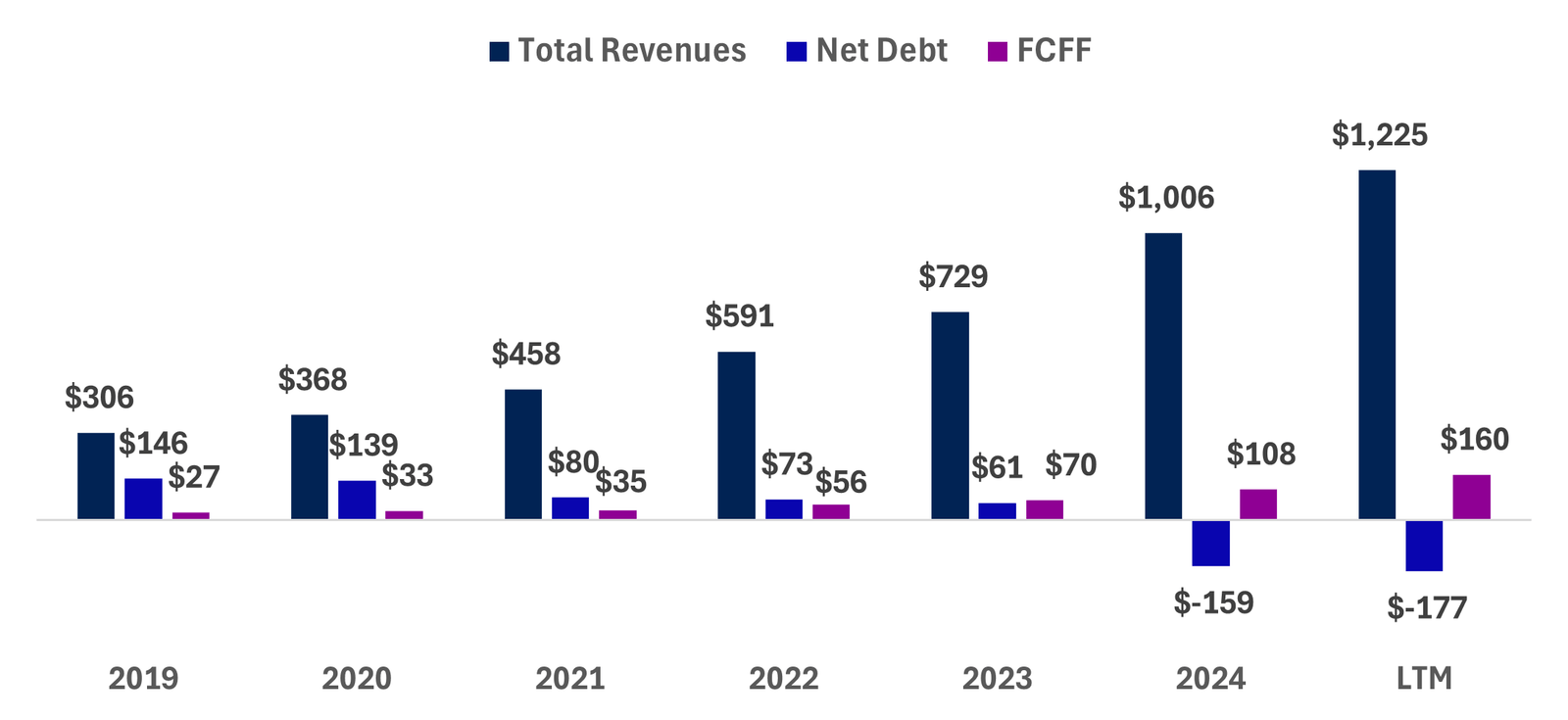
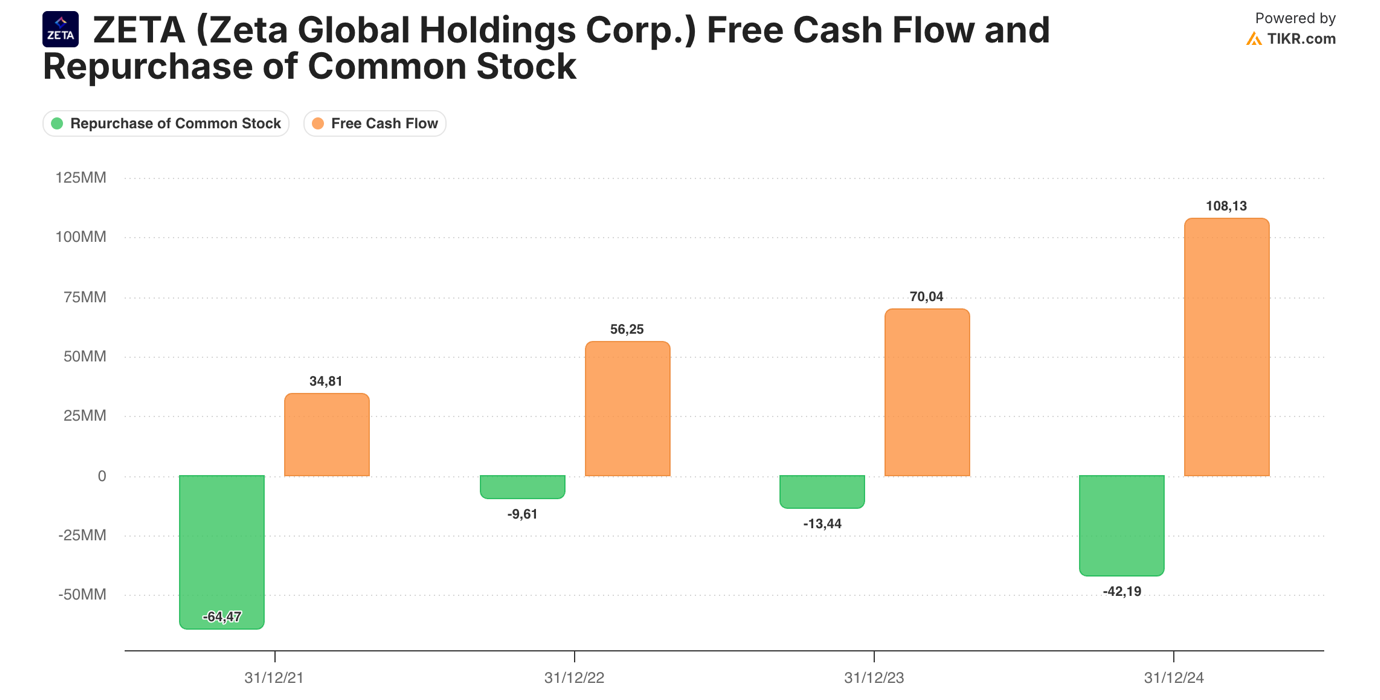
This balance sheet improvement has been underpinned by a marked acceleration in free cash flow generation. Zeta has consistently generated positive free cash flow in recent years, with a notable inflection in 2024 and further confirmation in 2025. Importantly, free cash flow growth has outpaced EBITDA growth, reflecting improving cash conversion, operating leverage and the scalability of the company’s software- and data-driven business model. Recent results indicate free cash flow margins moving into the low-to-mid teens, a meaningful level for an enterprise platform that remains in an expansion phase, materially reducing refinancing risk and enhancing downside protection in less favorable macro environments.
From a financial risk perspective, Zeta’s free cash flow generation should be viewed primarily through the lens of capital allocation discipline rather than shareholder yield. Management has articulated and executed a clear hierarchy in the use of internally generated cash. The first priority has been balance sheet strengthening, culminating in the transition to a net cash position.
Beyond balance sheet strengthening, incremental free cash flow provides Zeta with strategic optionality rather than funding core operating investment. Ongoing investment in R&D, data infrastructure and AI capabilities is embedded within the company’s operating cost structure and is fully supported by internally generated cash flows. As a result, free cash flow generation reflects the scalability of the platform after funding innovation, allowing excess cash to be allocated flexibly across selective M&A, balance sheet resilience and opportunistic shareholder returns.
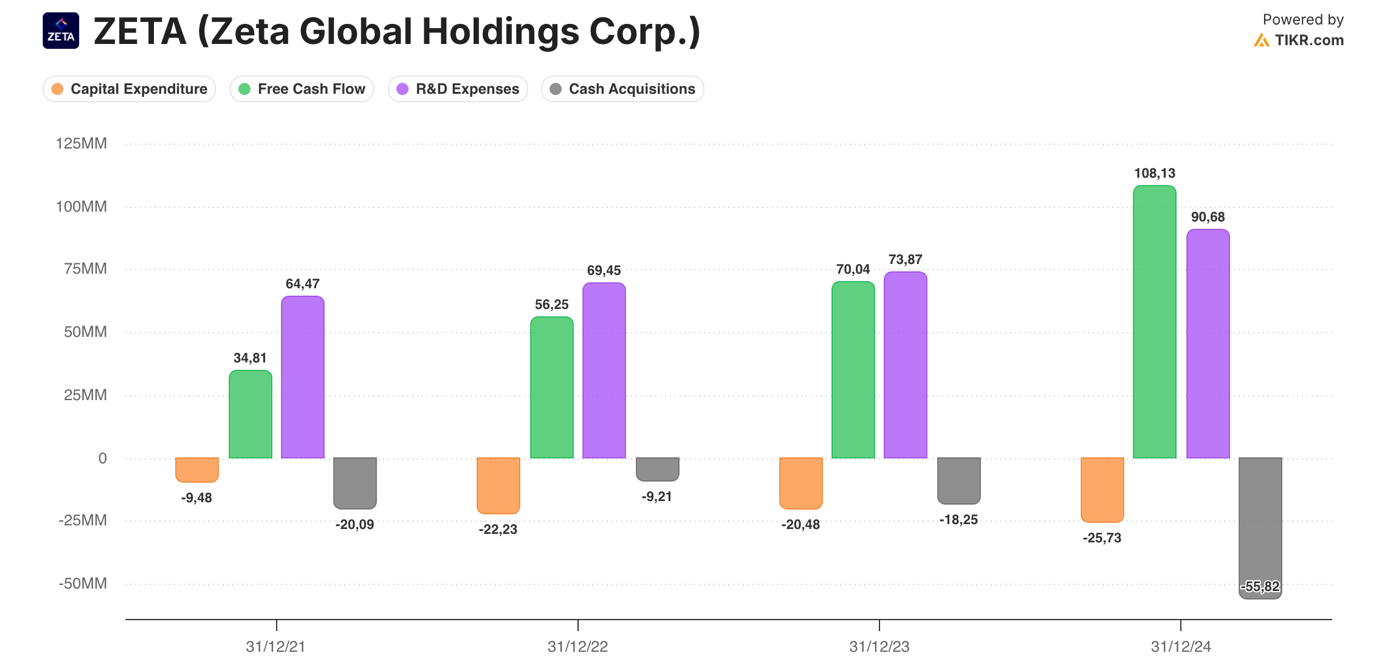
From an investment intensity perspective, Zeta operates with relatively modest capital expenditure requirements. Capex levels have remained contained and stable over time, reflecting the asset-light nature of a cloud-based software, data and AI infrastructure model. This low capital intensity limits structural cash absorption and allows a greater share of operating cash flow to remain available for reinvestment, balance sheet flexibility and optional shareholder returns. As a result, incremental revenue growth increasingly translates into free cash flow, reinforcing the company’s improving financial resilience.
Consistent with this framework, Zeta has introduced limited and discretionary shareholder return mechanisms only after achieving balance sheet resilience. In July 2025, the company’s board authorized a share repurchase and withholding program of up to $200 million through 2027. The program includes share withholding to satisfy tax obligations related to equity-based compensation as well as discretionary open-market repurchases, and is explicitly designed to be funded from internally generated free cash flow rather than incremental leverage.
As of September 30, 2025, the vast majority of the authorized capacity remained available, highlighting the non-obligatory and opportunistic nature of the program. From a financial risk standpoint, the authorization signals management’s confidence in the durability of free cash flow generation while preserving strategic flexibility.
Investment Thesis
As of early 2026, Zeta Global’s investment case is best evaluated through a medium-term lens, focusing on normalized earnings power, margin sustainability and cash flow durability rather than near-term execution alone. With 2025 largely serving as a year of validation for margin inflection and balance sheet normalization, the market is increasingly discounting the company’s ability to compound earnings into 2026 and 2027, which represent the relevant horizon for valuation.
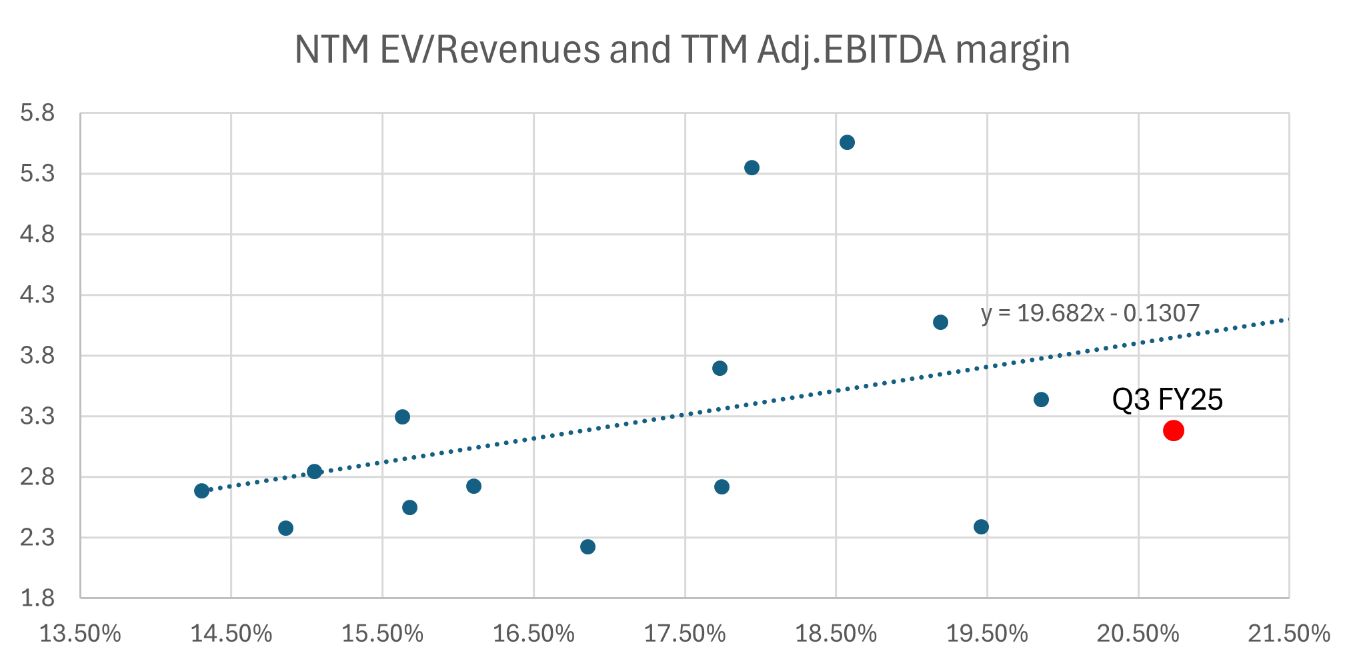
A useful starting point for assessing valuation is the relationship between profitability and revenue multiples. As illustrated by the dispersion analysis between NTM EV/Revenue and trailing adjusted EBITDA margins, Zeta currently screens below the level implied by its margin profile. Historically, higher adjusted EBITDA margins have been associated with structurally higher EV/Revenue multiples, reflecting operating leverage, scalability and cash flow visibility. Despite reaching adjusted EBITDA margins above 20%, Zeta’s NTM EV/Revenue multiple remains around 3.2x, below the 3.7–3.9x range implied by the regression trend. A normalization toward an EV/Revenue multiple of 3.8x, applied to 2026 estimated revenues of approximately $1.73 billion, implies an enterprise value of roughly $6.6 billion. Adjusting for the company’s net cash position, this translates into an equity value of approximately $27–28 per share.
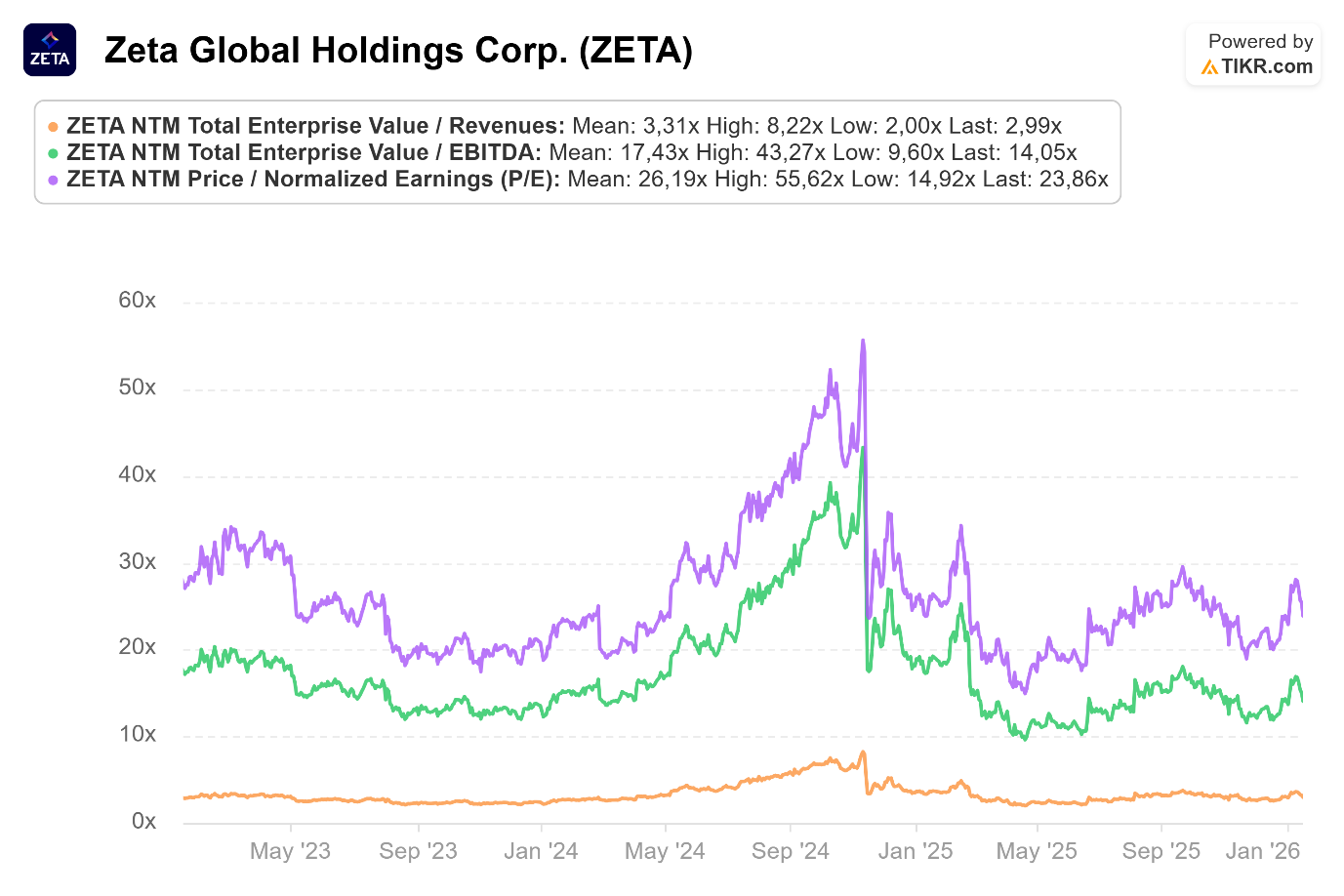
This valuation signal is independently corroborated by an earnings-based approach. Zeta currently trades at roughly 24x NTM P/E, below both its three-year historical average of 26x and its five-year average of 30x.
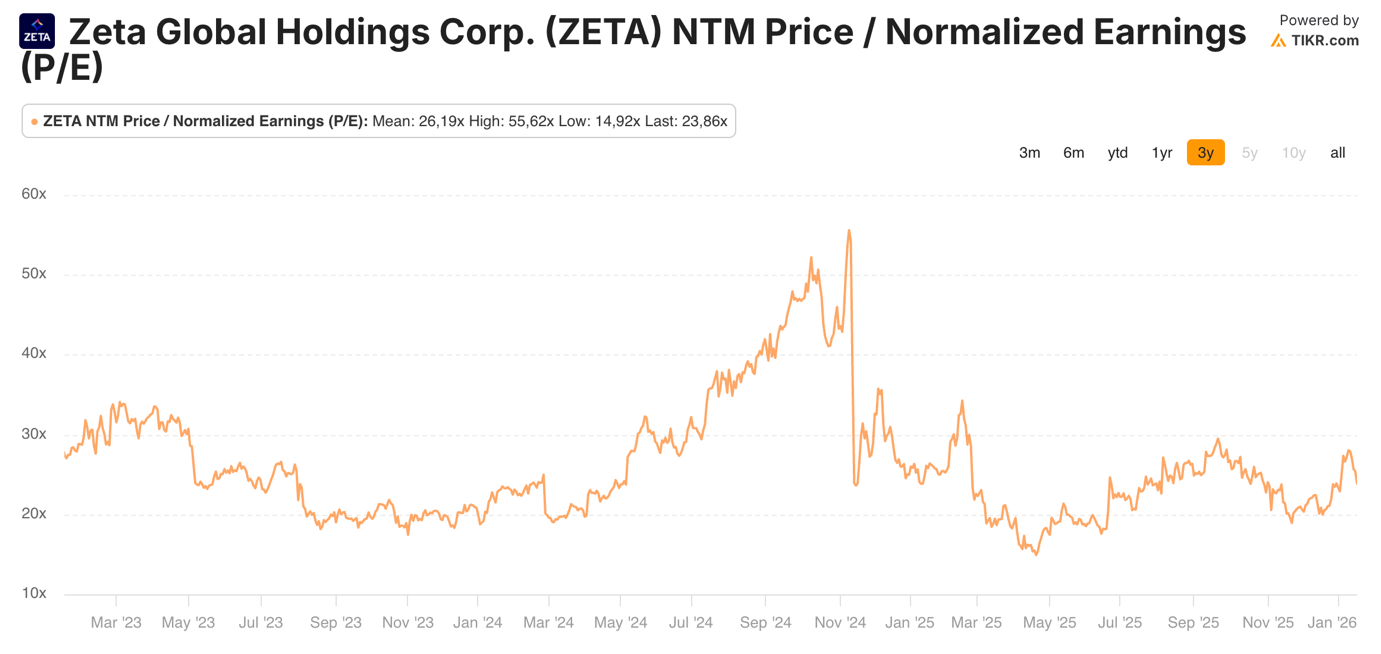
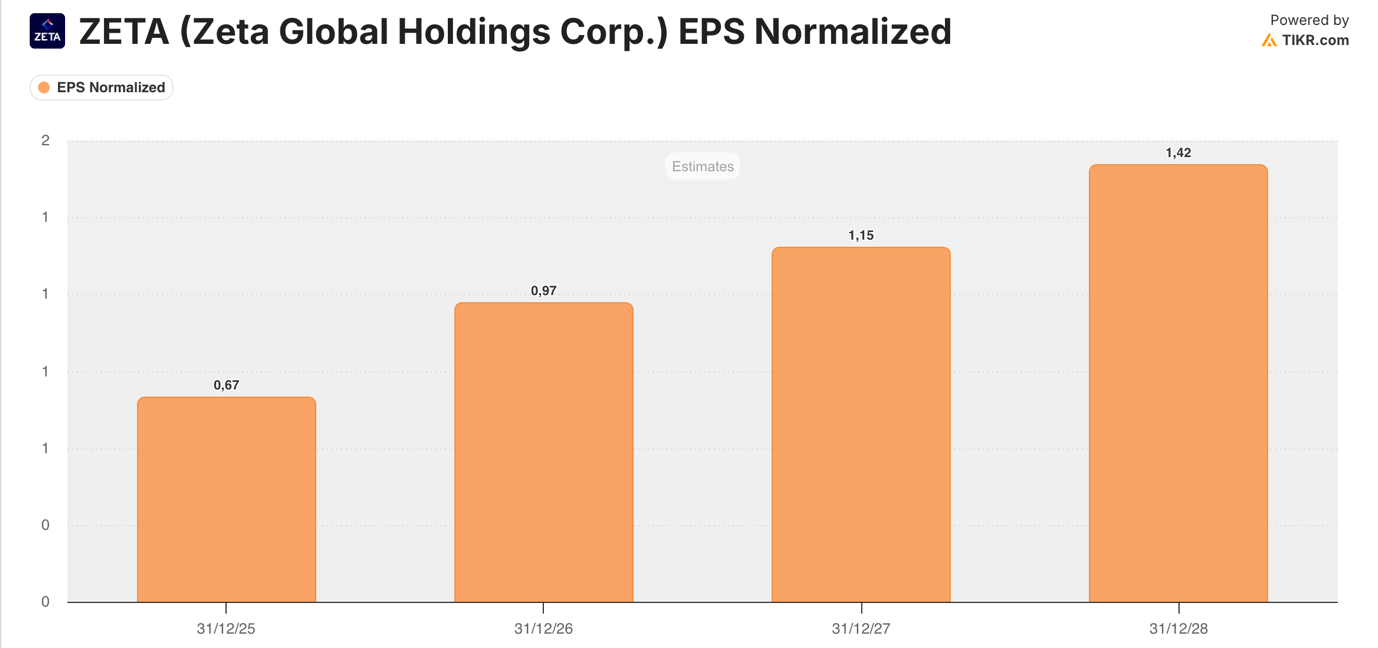
Importantly, this discount persists despite a materially stronger financial profile than in prior periods, characterized by higher margins, positive free cash flow and a net cash balance sheet. Even under a deliberately conservative assumption that the multiple does not re-rate and remains anchored at current levels, applying a 24x P/E to 2027 normalized EPS estimates of approximately $1.15 per share implies a 12-month target price in the $27–28 range. This outcome closely aligns with the EV/Revenue-based valuation, reinforcing the internal consistency of the analysis.
Crucially, these valuation outcomes should be viewed as conservative base-case estimates. They do not embed any aggressive assumptions around multiple expansion, nor do they fully incorporate potential cyclical or event-driven upside. In particular, they exclude any material contribution from elevated political and advocacy advertising spend related to the 2026 U.S. mid-term elections. Management has already guided to approximately $15 million of incremental revenue from political candidate spending alone, roughly double the contribution recorded during the 2022 mid-term election cycle. Historically, such spend has tended to skew late in the cycle and can ramp rapidly, providing upside optionality to both revenue growth and near-term operating leverage.

From a macro perspective, this political advertising tailwind is expected to materialize in an environment where the U.S. economy continues to exhibit resilience, supporting broader advertising and marketing budgets. In this context, incremental election-related spend represents a non-structural but highly accretive catalyst layered on top of Zeta’s core organic growth trajectory, rather than a prerequisite for the base investment case.
In addition, the macro backdrop entering 2026 is characterized by a resilient U.S. consumer and sustained corporate confidence, particularly across retail, consumer brands and commerce-oriented advertisers, which represent a core end market for Zeta Global. This environment supports continued marketing budget normalization beyond purely political spend, with large-scale global events such as the 2026 FIFA World Cup in the United States acting as incremental catalysts for brand investment, customer acquisition and omnichannel engagement initiatives. Importantly, these dynamics align well with Zeta’s customer base and data-driven, performance-oriented value proposition, reinforcing revenue visibility and upside optionality without being a prerequisite for the base-case thesis.
Taken together, Zeta’s current valuation reflects a business transitioning from a growth-at-any-cost phase to a scalable, cash-generative enterprise platform, but not yet one that appears fully priced for sustained medium-term compounding. Upside is primarily driven by continued execution, margin expansion and cash flow durability, with additional optionality from cyclical catalysts such as political advertising spend. Downside risk, meanwhile, is mitigated by the company’s strengthened balance sheet, improving cash conversion and capital-light operating model.
Importantly, Zeta has already demonstrated an ability to exhibit relative resilience during periods of macro and market stress. During the early phase of the 2022 equity drawdown, when rising inflation and tightening financial conditions drove a sharp compression in growth multiples across the broader market, the company stood out for its relative performance, supported by the durability of its revenue model and its exposure to mission-critical enterprise marketing infrastructure rather than discretionary consumer demand. This historical performance provides additional confidence that the current investment thesis is not solely dependent on favorable market conditions, but is underpinned by structural characteristics that have proven defensive across cycles.
As a result, the investment case remains firmly grounded in fundamentals, offering asymmetric upside should external catalysts materialize more favorably than currently embedded in expectations, while retaining a degree of downside protection relative to traditional growth-oriented peers.
By combining the different valuation methods previously discussed, we estimate Zeta’s fair price to be between $27-28 dollars per share, a 35% upside from current prices.
All opinions and views mentioned in this report constitute our judgments as of the date of writing and are subject to change at any time. The information contained in this material is not intended to be used as the primary basis for investment decisions and should not be construed as advice that meets the particular investment needs of an individual investor. Please note that investing involves risk, including loss of principal, and past performance may not be indicative of future results. Luminaria Research, its members, officers, directors, and employees expressly disclaim any liability for actions taken based on all or any part of the information contained in this writing.